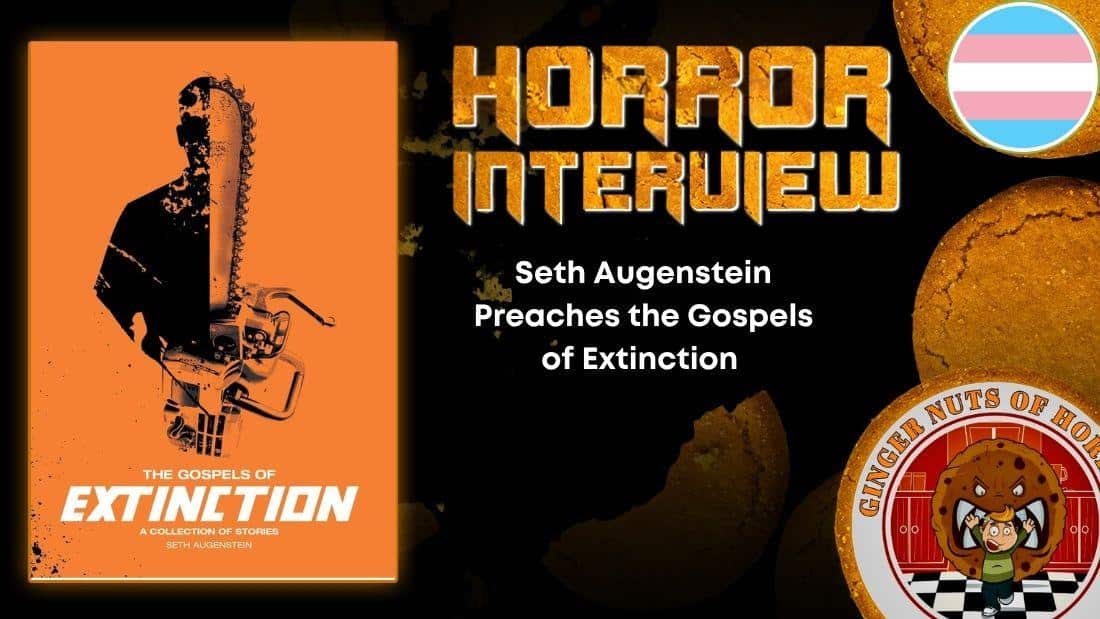
Seth Augenstein is set to release his debut short story collection, *The Gospels of Extinction*, on June 1 through Lost Meridian Press. The collection compiles numerous previously published stories, demonstrating Augenstein's unique blend of literary horror, featuring dark humor and profound dread.
Read More
Unlike conventional horror collections, Augenstein’s work incorporates unexpected elements—from a fictional portrayal of Ayn Rand wielding a chainsaw during a marital crisis to a ghost observing an unwelcome tour group in her home. Themes such as cannibalism, ancient curses, and family trauma run throughout, delivering both intended chills and dark humor.
Influenced by figures like Francisco Goya and music from Dmitri Shostakovich, Augenstein credits writers Brian Evenson, Jeffrey Ford, and Laird Barron as significant inspirations. However, the stories reflect his own voice, marked by confidence and an artful manipulation of sentence structure.
The title signifies more than horror; it evokes tales grappling with injustice, extinction, and the flickers of hope amidst despair. Augenstein describes himself as a diligent journalist turned writer, deeply invested in the histories around him. His previous works include the sci-fi novel *Project 137*, inspired by World War II atrocities, and an avant-garde Western set in early 20th century Mongolia, both of which received critical acclaim.
When creating stories, Augenstein embraces the open-ended question of “What if?” He draws from personal experiences and the haunting memories of historical events, enhancing his narratives’ depth. Crafting *The Gospels of Extinction* involved extensive editing, ensuring that the selected stories fit within a thematic framework that speaks to contemporary anxieties about family, ghosts of the past, and future terrors.
As the book transitioned from manuscript to publication, Augenstein was surprised by the evolution of his initial vision. He found that earlier drafts often took unexpected turns, presenting insights about both humanity and his own beliefs.
On how readers interpret his work, Augenstein expresses intrigue at their analyses, often discovering dimensions he hadn't initially recognized. He notes that horror provides a way to confront real-life injustices through metaphor, allowing him to process his past experiences as a journalist.
Through his stories, Augenstein explores settings as characters themselves, allowing readers to fill in the shadows of dread effectively. His narrative style emphasizes the rhythm and sound of language to create immersive scenes of horror without descending into gratuitous violence.
In addition to horror, Augenstein draws from history, music, and observations of the world around him. He acknowledges his literary ancestors, citing a range of influences, from the genocide of Native Americans to personal environments that shape his storytelling.
Finally, Augenstein hopes *The Gospels of Extinction* will change readers’ perspectives on horror. He argues that at its core, horror can evoke thought and reflection about the human condition—offering not just scares but an invitation to engage with deeper truths.