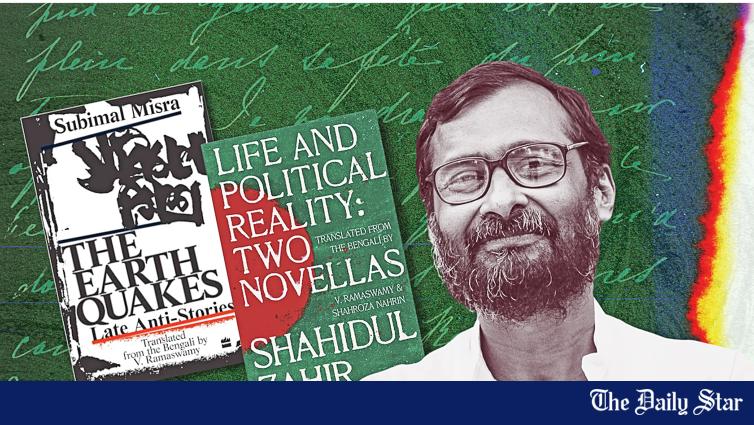
V. Ramaswamy, a Kolkata-based translator and writer, shared insights into his translation career and the influence of artificial intelligence on literary translation in an interview with The Daily Star.
Read More
Ramaswamy began his translation journey in 2005 when he was introduced to the works of Bangla writer Subimal Misra through his friend Dr. Mrinal Bose. He found Misra's writing resonated with his background as a grassroots organizer for over two decades. Ramaswamy credits his time at the Sangam House residency in 2011 for deepening his commitment to translation, leading him to translate three volumes of Misra’s work and to embrace the voices from marginalized communities.
Possessing a Tamil background, Ramaswamy's education was primarily in English, but he learned Bangla and became engaged with its culture through his activism. This background has shaped his approach to translation, providing him with a unique perspective as both an insider and outsider.
In 2020, Ramaswamy learned about Shawkat Ali's novels, "Prodoshe Prakrito Jon" and "Narai," from his translation assistant, Srishti Dutta Chowdhury. Although originally intended to collaborate with Chowdhury, Ramaswamy ended up co-translating with Mohiuddin Jahangir, who had written his PhD thesis on Ali. Their translation of "Narai" is titled "We Must Fight!" and is set for release soon.
Discussing his collaborative work, Ramaswamy stated that while he hadn't planned to collaborate initially, it turned out to be a fruitful process. He believes that working with co-translators increases accountability and enriches the translation experience.
Ramaswamy chooses what to translate based on specific circumstances and connections rather than reading the entire work beforehand. He meticulously examines the text during translation, emphasizing that a translator engages with it more deeply than any reader.
In response to comments from his wife about his translations making him more like the darker themes in Misra’s writing, Ramaswamy noted that translating various authors has transformed him in multiple ways, allowing him to connect with diverse characters and narratives.
On the topic of machine translation, he expressed skepticism regarding AI's potential in literary translation. While acknowledging that AI will improve, he believes the art of translation remains inherently human, enriched by creativity and emotional depth that machines can't replicate. Ramaswamy stated that despite advancements in technology, the demand for human translation will persist.
Ramaswamy also highlighted the importance of cultural nuances in translation. He emphasized that an understanding of the source culture enhances a translator’s work, allowing readers to appreciate the sociocultural context embedded in language. He noted that selecting certain expressions can convey deeper meanings, advocating for translations that reveal the richness of Bangla speech rather than opting for equivalent phrases that may diminish their impact.
Shahriar Shaams, a journalist for The Daily Star, conducted this interview.