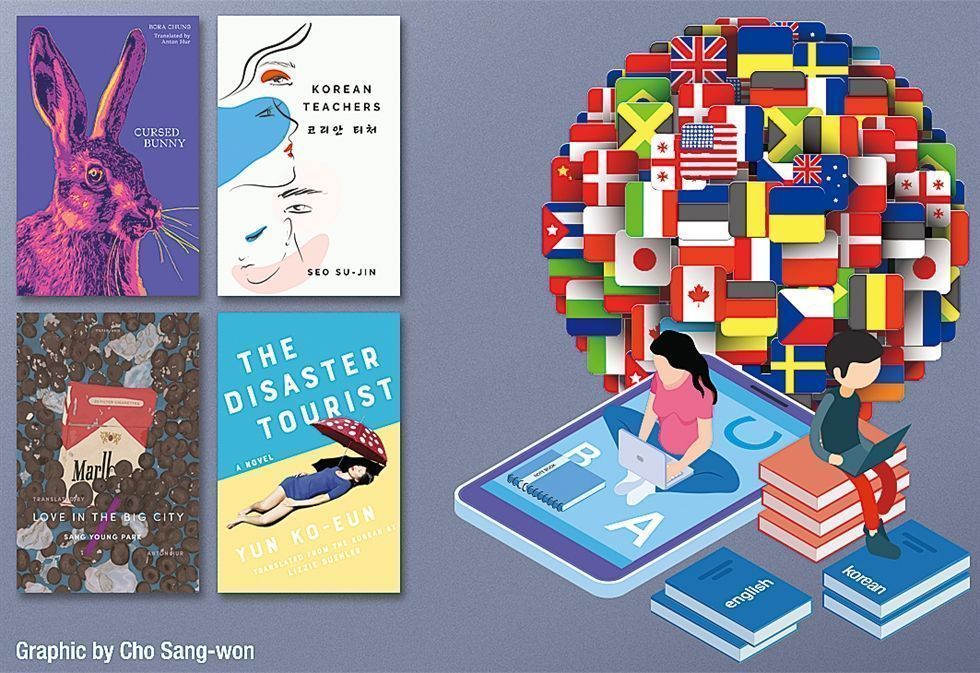
On March 10, while in self-isolation in Seoul after testing positive for COVID-19, translator Anton Hur received exciting news via email from the British publishing house Honford Star: he had been longlisted for the 2022 International Booker Prize. He was nominated for his translation of Chung Bora's collection, “Cursed Bunny.” Shortly after, another email announced that Park Sang-young's “Love in the Big City,” which he also translated, had been nominated for the same prize. Hur, feeling incredulous about the nominations, expressed his disbelief during a recent interview with The Korea Times.
Read More
Each year, over 100 translated works compete for the Booker Prize in the UK and Ireland, with projects from recognized authors, including Nobel laureates. Hur was notably responsible for two out of the thirteen nominated works. The shortlist for the prize featured “Cursed Bunny,” which was revealed recently.
In addition to Hur's recognition, other translated Korean works have recently garnered international accolades. Yun Ko-eun's eco-thriller “The Disaster Tourist” won the Crime Fiction in Translation Dagger from the UK's Crime Writers' Association last year, becoming the first Korean work to achieve this honor. It was translated by Lizzie Buehler, a Ph.D. student in comparative literature at Harvard University.
Buehler shared that her journey with Korean literature began with translating part of Yun’s short story collection for her undergraduate thesis, which led to her translating “The Disaster Tourist.” However, translators often do not receive the recognition they deserve in Korea, where discussions about literary achievements frequently overlook their contributions. The dialogues tend to focus on comparisons between the source and translated works, often critiquing the perceived loss of cultural essence.
Hur emphasized that literary translators perform numerous roles beyond mere translation. He noted, “This magical publishing fairy who just gives jobs to translators doesn't exist. I have to basically create my own job.” He mentioned that literary translators must establish connections with authors and Korean publishers to secure rights for their translations, often facing rejection and questioning from publishers unfamiliar with the process. Even after obtaining rights, they write proposals and pitch works to agents and agencies in the English-speaking market, which can be particularly challenging for those translating lesser-known authors.
Both Hur and Buehler highlighted the additional workload that accompanies translation, as they often find themselves acting as agents, managing the complexities of pitching their projects to publishers unfamiliar with the original language. Hur’s focus is on amplifying narratives that are frequently marginalized in Korea's literary landscape, particularly those written by women and queer authors.
He pointed out that there is often a discrepancy between what local institutions deem worthy of translation and what audiences outside Korea are eager to read. His translations, including “Cursed Bunny” and “Love in the Big City,” aim to highlight these underrepresented voices.
“Cursed Bunny” blends absurdism, science fiction, horror, and fantasy to critique societal issues, while “Love in the Big City” presents an intimate look at a young gay man's experiences in contemporary Korea.
As one of only three full-time translators based in Seoul, Hur explained that the limited market for Korean literature in English-speaking countries can sustain only a small number of translators. He noted that only about 3 to 5 percent of all published books in the U.S. and U.K. are translations, with Korean works making up about 1 percent of that share. Buehler also remarked that the English-speaking literary world has historically been inward-looking, but she believes that readers are gradually becoming more receptive to translated literature.
Recently, the perception of translated Korean literature has shifted, with more mainstream readers embracing these works, which are often more accessible and engaging. Buehler mentioned that contemporary translations tend to have broader appeal, moving away from the academic approach traditionally associated with non-Western literature.
As interest in Korean literature continues to grow, Hur encourages Korean rights holders to trust translators and work collaboratively to boost the global visibility of Korean literature. Despite the essential role of translators in elevating these works, some publishers remain skeptical. Hur concluded, “In the end, we all have the same goal: we want Korean literature to succeed and flourish.”