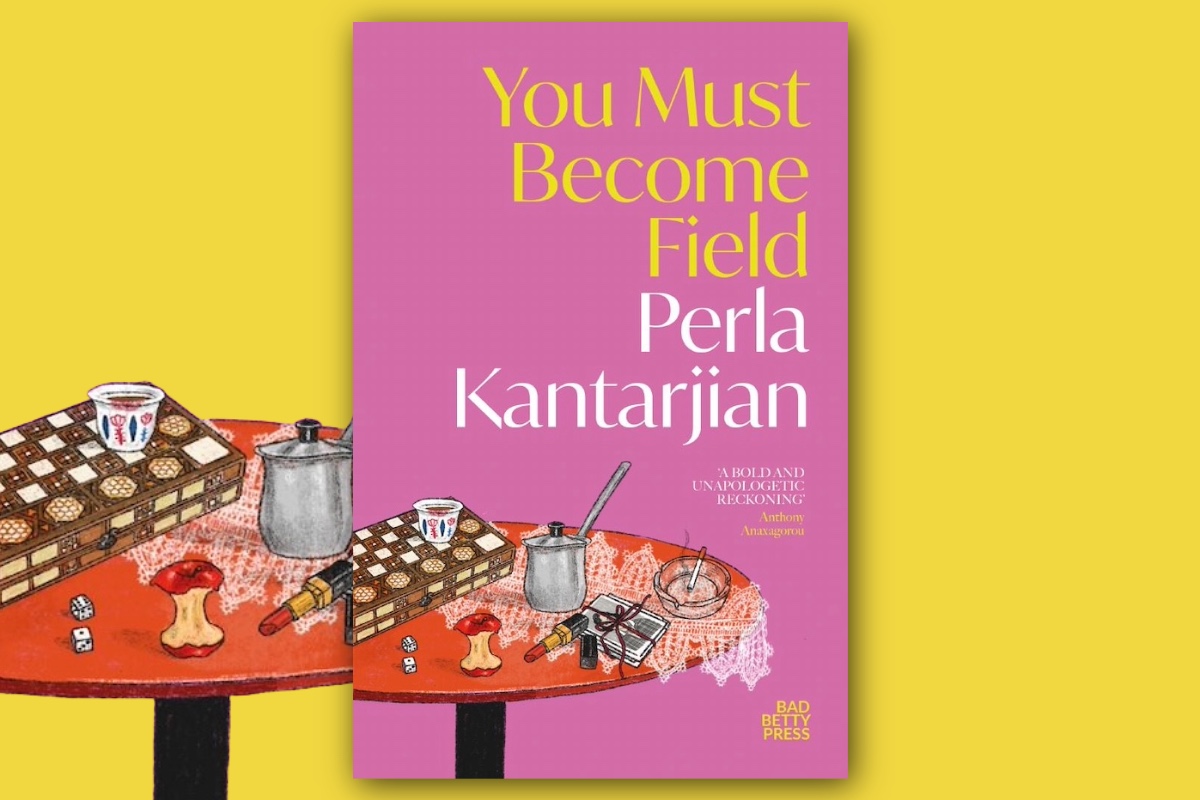
Perla Kantarjian’s debut poetry collection, "You Must Become Field," explores the complexities of belonging through themes of inheritance, displacement, and survival. The Lebanese Armenian writer weaves her narrative across English, Armenian, and Arabic, allowing the landscapes of Armenia, Lebanon, and England to manifest as experiences carried within the body.
Read More
The collection opens with reflective lines that express a profound connection to identity: “I descend from interruption. / I carry my home in my mouth / and my mouth in my hands.” Here, home is portrayed as portable, shaped by memory, language, and family stories that emphasize the diaspora experience.
Kantarjian contextualizes her work within the legacy of the Armenian Genocide and traces generations of movement that shape family identity. She illustrates how work, community, and traditions serve as vessels of survival amid ongoing upheaval.
In her perspective, the Lebanese Armenian experience is one of reconstruction, where survival takes new forms in a different homeland. Kantarjian highlights the intertwined nature of Armenian and Lebanese identities, revealing how they coexist through familial bonds, cultural practices, and everyday life.
As the collection progresses, England becomes a focal point, presenting cultural belonging in a contrasting light. Kantarjian reflects on her interactions with British institutions and the alienation that can arise from cultural ignorance, particularly when one’s history feels objectified or obscured.
Encounters with fellow migrants and familiar foods in London remind readers that displacement entails shared experiences rather than isolation. These connections foster a sense of belonging rooted in a mutual understanding of living between places.
Kantarjian also examines how countries remember and reinterpret their histories. She juxtaposes the preserved landscapes of Britain with memories of a conflict-ridden Lebanon and imagines Armenia as both a physical place and an ancestral dream.
The collection critiques the disparity between privilege and necessity, particularly in its portrayal of light and darkness. While consumer culture often commodifies light, Kantarjian’s reflections on Lebanon’s electricity shortages reveal differing realities that shape daily life.
Each poem captures the tension between carefully preserved histories and the harsh realities of places where necessities face disruption, inviting consideration of how ordinary objects carry diverse meanings based on context.
Kantarjian's work emerges as a tapestry of family history, mythology, migration, and contemporary violence, ensuring that no single aspect overshadows the others. The collection is concerned with survival in various forms: in language, memory, family, and imagination.
Both Armenia and Lebanon bear the scars of history, and belonging to both means navigating multiple narratives of rupture while remaining sensitive to the fragility of what others may see as stable. Kantarjian transforms this vulnerability into an insightful lens through which to perceive the world.
To "become field" suggests allowing these histories to take root without being overwhelmed by them, embracing the losses and the potential for growth that may arise from the wounds.
Published by Bad Betty Press on September 24, "You Must Become Field" invites readers to engage deeply with Kantarjian’s exploration of identity and diaspora. More information about her work can be found on her website, perlakantarjian.com.