The Frankfurt Book Fair continues to be a crucial event for the publishing industry, showcasing both opportunities and challenges. This year's fair highlighted key concerns such as artificial intelligence, growth in audiobooks, shrinking profit margins, and the increasing globalization of English-language publishing.
Read More
Many attendees noted that AI has become a dominant topic, particularly regarding its impact on jobs. Ghostwriters are reporting a decline in commissions as clients turn to chatbots, and translators are increasingly tasked with refining machine-generated text. A 2026 survey presented at the fair indicated that approximately 70% of translators had used AI for research or terminology, but fewer than 30% reported a reduction in their workload. Publishers are also grappling with AI's dual role, claiming copyright infringements by language models while exploring AI for promotional and administrative tasks. Major publishers are testing these technologies while attempting to safeguard their original manuscripts, according to reports from Reuters and WIRED.
Concerns extend beyond editorial roles; sessions at Frankfurt suggested that AI could undermine entry-level positions traditionally seen as entry points into publishing. This anxiety coincides with broader market shifts, particularly in the self-help category, which has experienced a notable decline in sales in the U.S., with print revenues dropping 23% in the first nine months of 2026 compared to the same period in 2025. Observations from Tim Ferriss resonated throughout the fair, cautioning that the market for information is increasingly vulnerable to AI-generated content.
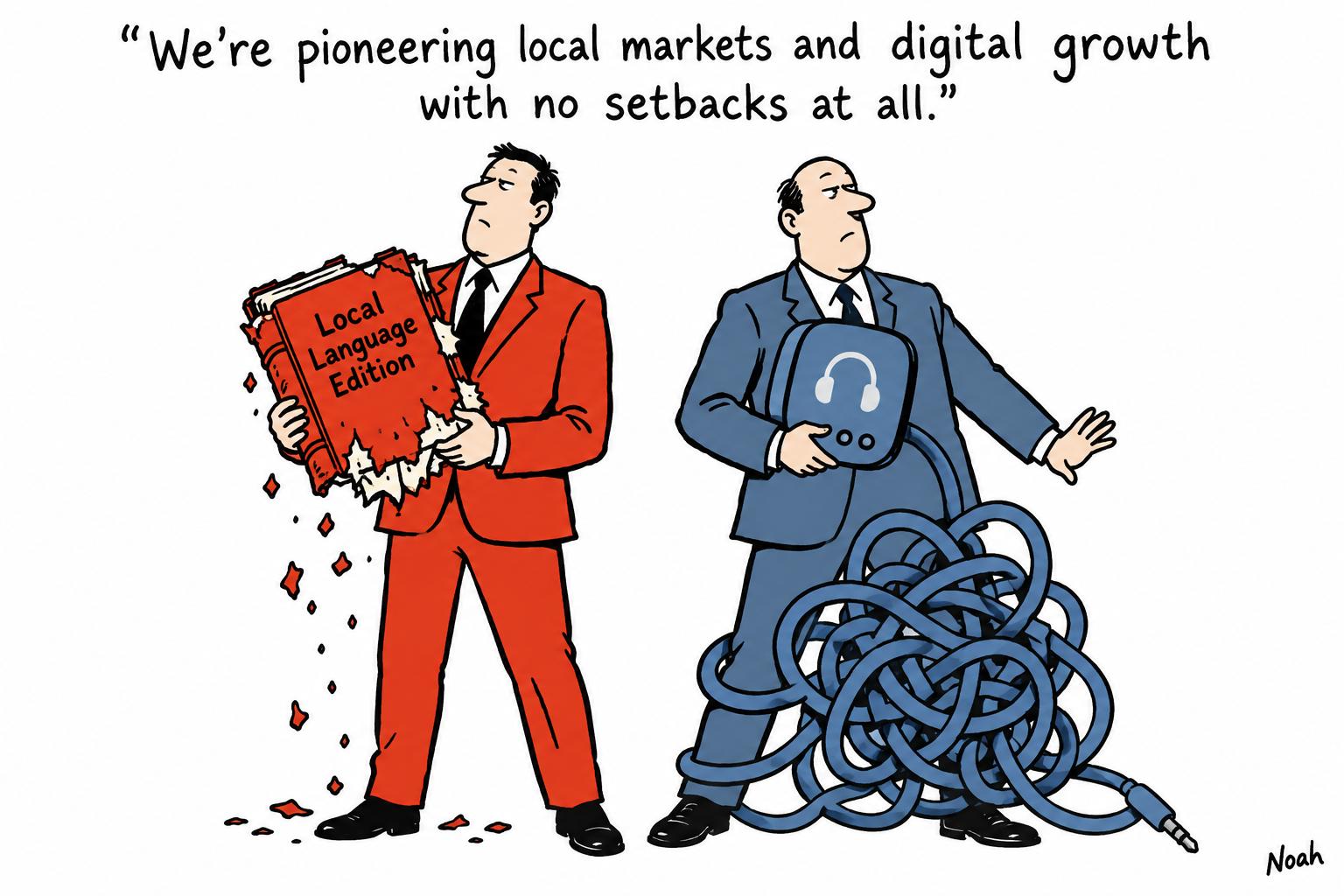
In contrast, audiobooks emerged as one of the most promising sectors within publishing. Audible announced ambitions to make "every book in every language" available as an audiobook, leveraging AI to facilitate this goal. Their newsroom reported that audiobooks are the fastest-growing format, with a recent survey revealing that about half of listeners are open to AI-narrated titles. Spotify is also broadening its audiobook offerings, indicating plans to use AI narration in areas underserved by human voice talent. In Sweden, audiobooks already account for a significant portion of publisher revenue, suggesting a potential shift towards a more platform-centered market.
This transition reflects larger structural changes in the business. Simon & Schuster's annual revenue approximates $1 billion, comparable to Tencent’s China Literature. Webtoon Entertainment's projected $1.35 billion revenue for 2024 hints at the rising influence of non-traditional models. Simon & Schuster's new imprint, Simon Stream, aims to adapt to these changes by targeting self-published authors with a model that offers no advance but shares net ebook receipts monthly while launching titles in multiple formats simultaneously.
A critical issue discussed at the fair was territorial rights, especially in Europe, where publishers face challenges defending local-language markets against quicker, less expensive English editions. Traditionally, European publishers benefitted from delayed translations, but this model is increasingly strained as English proficiency rises. Some publishers are now seeking formal release windows for translations to avoid being undercut, while others aim to synchronize translations with English editions. According to the Federation of European Publishers, revenues dropped 1.2% in 2025, with unit sales down 6% since 2021, highlighting a significant contraction in the sector since 2007.
Despite these challenges, the fair's conversations around fiction indicated a continued market desire for engaging and emotionally rich storytelling. Interest in horror, dark romance, and multigenerational family sagas remains strong. Literary publishers are increasingly looking for genre elements, while non-fiction buyers are focused on historical, true crime, and socio-political titles. There was also demand for puzzle and gaming books, showcasing a potential shift towards print that encourages readers to engage without digital distractions.