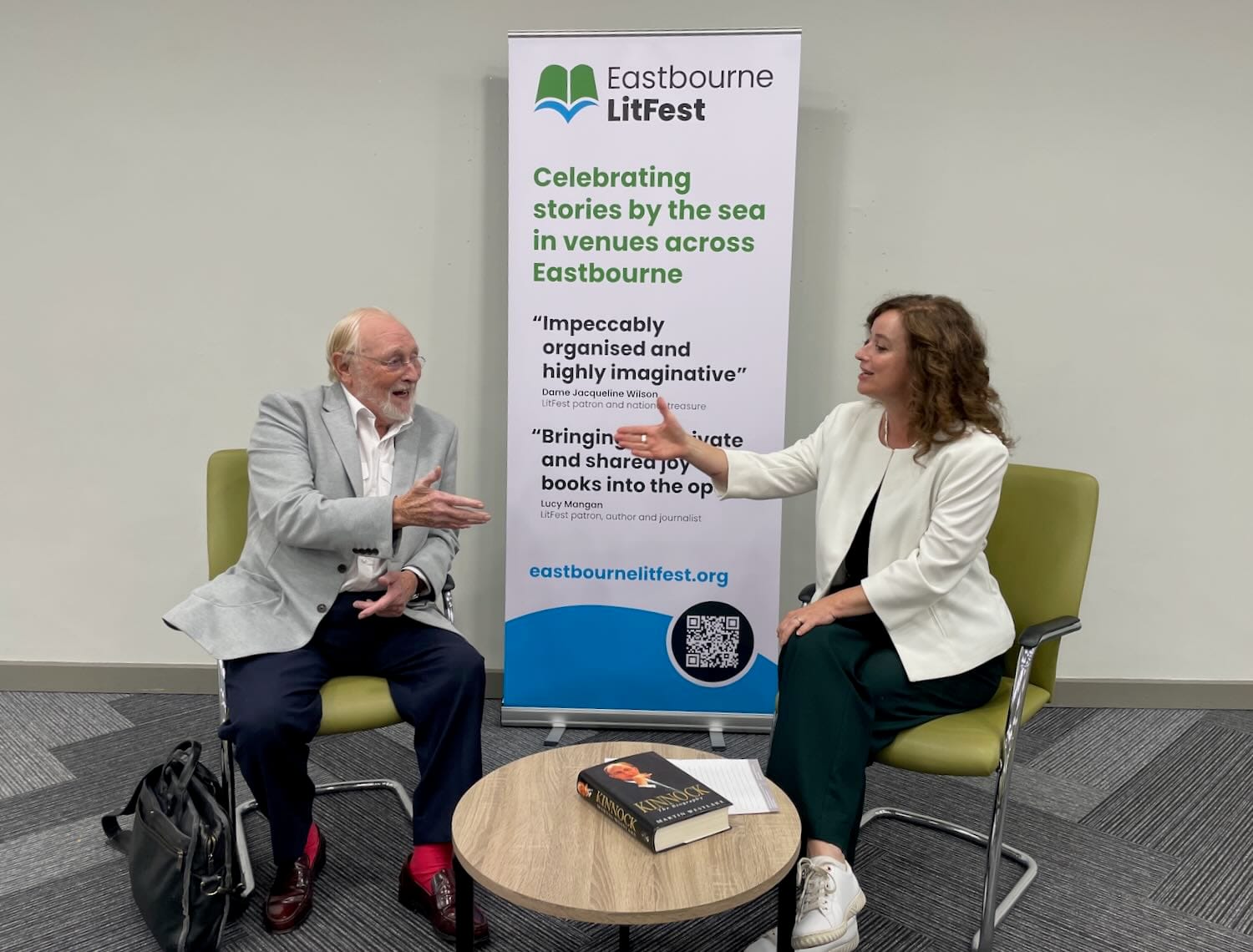
Lord Neil Kinnock engaged an audience of around 100 at Eastbourne’s inaugural Literature Festival, sharing insights into his favorite books and political perspectives. In a 75-minute conversation with author and journalist Deborah O’Donoghue, the former Labour leader reflected on his literary influences and political foes.
Read More
Kinnock, 84, recounted how his parents instilled a love for reading in him from a young age, with books being the primary gifts he received. He enjoyed the works of R.D. Blackmore, classic authors, and all of Charles Dickens' stories, deeming Dickens “insurmountable and irreplaceable as a generator of ideas.” He noted that by age 12, he recognized that the amenities in his south Wales community were collectively funded, leading him towards socialist ideals. At 13, reading John Steinbeck’s The Grapes of Wrath ignited his political awakening, prompting him to join the Labour Party in January 1956.
When asked about his aspirations as a writer, Kinnock downplayed the notion, humorously stating that he felt too lazy for the solitary writing life. He admitted that the only speech he had prepared prior to becoming shadow education secretary was a brief nomination speech. Reflecting on his time as party leader from 1983 to 1992, he explained that he often completed his speeches at the last minute, sometimes even during the conference.
Kinnock shared his strong feelings about political adversaries, expressing disdain for former National Union of Mineworkers President Arthur Scargill and former Prime Minister Margaret Thatcher. He humorously stated, "Scargill and Thatcher deserved each other," and criticized Thatcher's politics and personal demeanor. Conversely, he described John Major as more approachable and capable of meaningful discussions. Agents of tension included John Prescott, with whom he had various disagreements, and his successor as Labour leader, John Smith, with whom he also had substantial disagreements yet managed to work effectively.
As for recommendations, Kinnock pointed to the second half of George Orwell’s The Road to Wigan Pier and the works of R.H. Tawney and Jack London, passionately quoting passages that aligned with his democratic socialist beliefs. He acknowledged that his late wife, Glenys, had a more intellectual reading preference than his taste for popular thrillers.
In response to a question about youth engagement in democracy, Kinnock emphasized the importance of civic education in schools, placing it on par with traditional subjects like math and English.
Audience member Adam Callaghan, a politics and history student, found Kinnock's talk insightful, especially in the context of 1980s politics he studies. Kinnock's discussion was part of a broader festival featuring over 40 events focused on literature, scheduled to return next year from September 24 to 26.