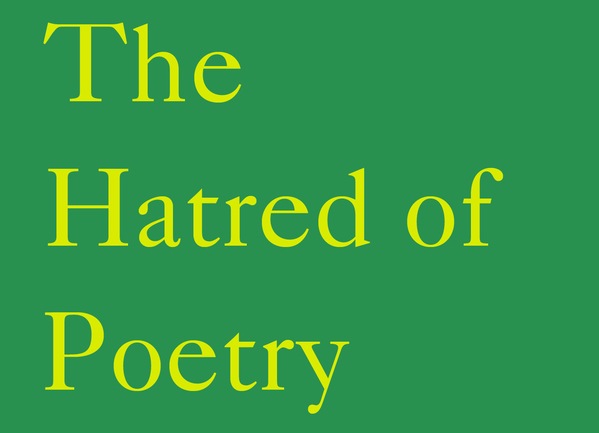
In his new book, The Hatred of Poetry, Ben Lerner explores the complex relationship between readers and poetry, suggesting that a certain disdain for the art form is intrinsic to it. Lerner contends that the expectations imposed on poets are often unattainable, fostering both admiration and resentment. Michael Clune interviewed Lerner earlier this month at Greenlight Books in Brooklyn, presenting an edited version of their conversation.
Read More
Lerner's perspective reframes poetic value, categorizing poets as “the terrible, the great, and the silent,” contrasting with conventional assessments of mere competence. He refers to William McGonagall, infamously regarded as the worst poet, highlighting his notorious work “The Tay Bridge Disaster”:
Beautiful railway bridge of the silv’ry Tay
Alas! I am very sorry to say
That ninety lives have been taken away
On the last sabbath day of 1879
Which will be remembered for a very longtime.
While Lerner acknowledges that many poems succeed in their aims, he points out that the ongoing pressure for poems to meet societal expectations often leads to a perception of failure. He emphasizes the impossible dual demand on lyric poetry to express deeply personal experiences while remaining universally accessible, a balance that he argues can only be achieved through revolutionary change.
He elaborates that a significant portion of the disdain for poetry stems from anxieties surrounding intelligibility. Unlike modern art, which some view as accessible, poetry evokes a stronger sense of exclusion. This stems from early educational teachings that equate one’s humanity with the ability to write poetry. Many individuals disengage from poetry over time, only to encounter it in specific, often social contexts like weddings, leading to resentment about perceived exclusion from the poetic realm.
Clune noted a cartoon in The Economist criticizing Switzerland's proposal for a minimum yearly salary that portrayed individuals holding poetry books as idle. Lerner connected this critique to Walt Whitman’s portrayal of the poet's work as both essential and leisurely, reflecting the tension between labor and leisure in poetic creation.
As the conversation shifted to the work of Robert Musil and themes of realization versus non-realization, Lerner discussed how art occupies a unique space that allows exploration beyond the actual. This, he suggested, is critical for understanding the value of poetic expression.
Lerner also referenced the work of Alan Grossman, particularly in relation to negative theology and iconoclasm in poetry. He cited a story about a child in synagogue who recites the Hebrew alphabet instead of praying, symbolizing the inadequacy of human expression when trying to reach the divine.
In discussing Claudia Rankine’s Citizen, Lerner remarked on the concept of lyric poetry as conveying loss, particularly in the context of racial issues. He drew parallels with Hart Crane’s commitment to the impossible, noting how such ambitions can warp poetry from within.
Lerner concluded by addressing the nostalgic longing for a universal poetic voice, challenging the notion that only a past, homogeneous poetic tradition could unite diverse experiences. He affirmed the ongoing relevance of contemporary poets who are redefining collective consciousness through their works.