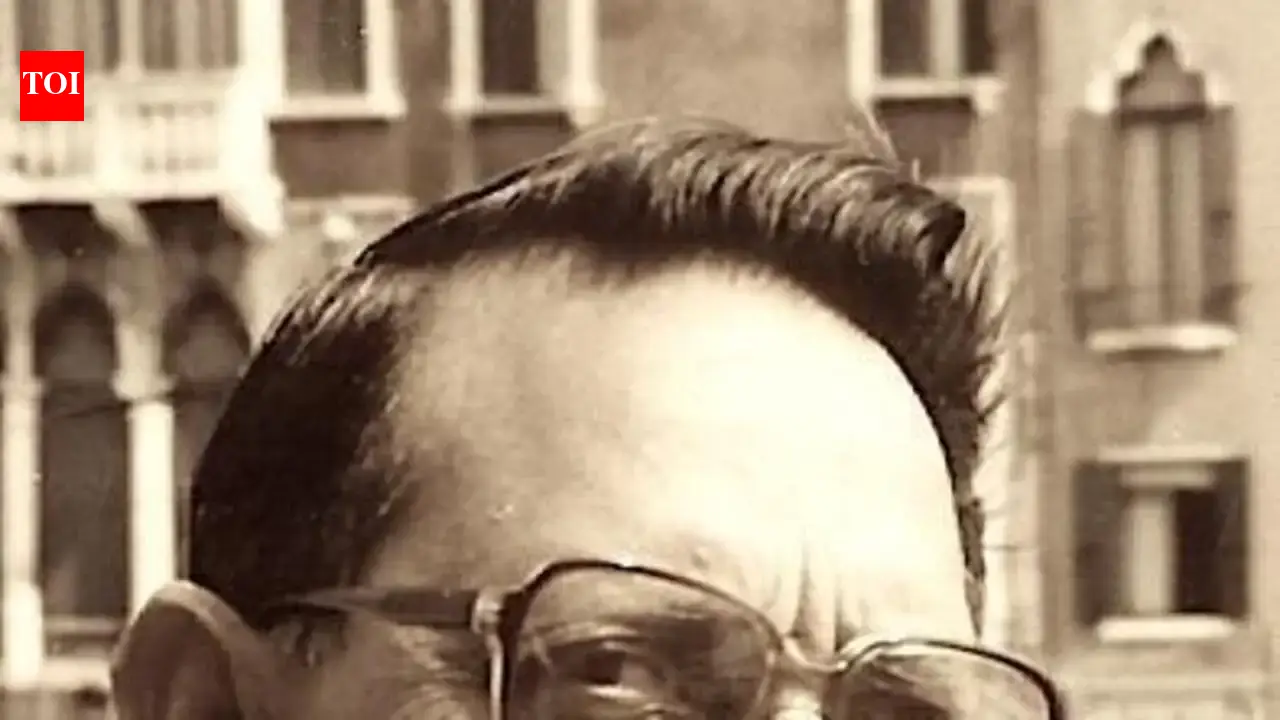
As Kunwar Narain's birth centenary approaches, scholars and literary enthusiasts are exploring the enduring impact of his poetry as it journeys from Hindi to various other languages. The translation of his layered and philosophical works is allowing his poetry to resonate with new audiences.
Read More
Apurva Narain, Kunwar Narain’s son, highlights that translating his father’s poetry involves more than just converting words from Hindi to English; it requires delving into the silences and deeper meanings of the original texts. He has translated two significant collections, *No Other World* and *Witnesses of Remembrance*, the latter comprising around 100 poems from different stages of Narain’s career. His works have also been translated into several languages, including French, Estonian, Russian, Italian, Spanish, Polish, and multiple Indian languages.
Translation was a theme of interest for Narain himself. His long poem *Kumarajiva* reflects on the Buddhist scholar and translator, emphasizing how translation can breathe new life into ideas across different cultures and eras. Dr. Rekha Sethi, a translator and professor, notes that Narain viewed translation as a profound act, positioning himself within a multilingual literary community by translating works from writers such as Mallarmé and Cavafy.
Narain’s poetry is characterized by its expansive influences, drawing upon Indian traditions as well as Western literature and philosophy. According to Apurva, these influences were deeply intertwined with Indian thought. Dr. Sethi observes that Narain’s legacy lies in his rejection of binary thinking, framing experiences in nuanced ways that provoke reflection on individual and collective identities.
Dr. Pankaj Kumar Bose, a researcher and former professor at Delhi University, adds that Narain's work transcends the boundaries of Hindi literature, attracting global researchers thanks to its deep roots in Indian philosophical tradition.
For newcomers to Narain’s poetry, Sethi suggests starting with the English translations *No Other World* and *Witnesses of Remembrance*, while Hindi readers might explore works such as *Koi Doosra Nahin* and *In Dinon*. His longer poems, like *Atmajayi* and *Vajashrava Ke Bahane*, delve into themes of life, death, and history.
As the centenary year unfolds, translation serves not only as a bridge for non-Hindi speakers but also as a vessel for Narain’s contemplations on memory, humanity, and the connection between self and other. Recently, Delhi's literary community honored Kunwar Narain's legacy with two events, with more planned throughout the centenary year in 2027.