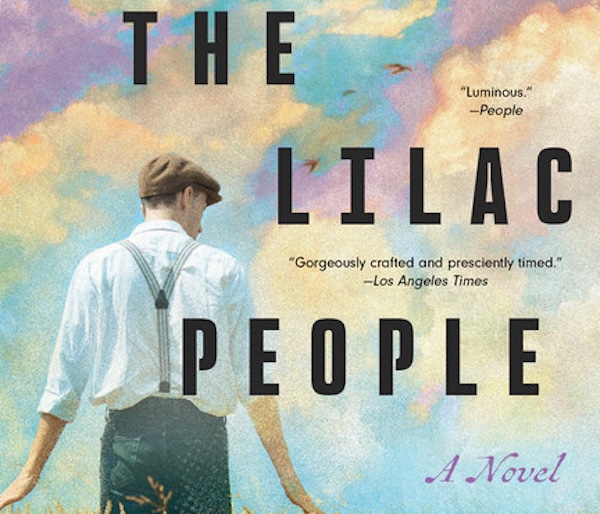
In an interview with Preston Gralla, novelist Milo Todd discussed his recently released paperback, The Lilac People, which explores the queer and trans community in Berlin during 1932, before the rise of the Nazis. The story centers on a trans man named Bertie and his girlfriend Sofie, who escape the Nazis by fleeing to a farm and adopting the identities of an elderly couple.
Read More
Todd's work has received notable recognition, including being named an ALA Notable Book of the Year and a finalist for the New England Book Award. He is also a grantee of the Massachusetts Cultural Council and serves as Co-Editor-in-Chief of the LGBTQ+ literary journal, Foglifter Journal.
Todd began researching the book in late 2015 after encountering a social media post about the post-World War II treatment of queer and trans individuals by Allied forces, which ignited his anger and expanded his research into a broader historical context. He described the research process as incredibly challenging due to the limited availability of information in English. This led him to learn German, allowing access to more academic resources, particularly the Magnus Hirschfeld Society in Berlin, which focuses on documenting queer and trans life during the Weimar Republic.
He shared that he was consistently surprised by the findings of his research, noting the vibrant and rich histories of queer and trans individuals. Todd emphasized the importance of accurately portraying these histories in his writing, balancing plot and character with research to avoid a non-fiction tone while still providing honest representation of the historical context.
When discussing the parallels between life for queer and trans individuals in the 1930s and today, Todd noted similarities in societal treatment and the lingering surveillance over personal lives, stating, "The big difference now, though, is that there’s much more surveillance technologically, which makes it near impossible to be left alone in any capacity." He also compared the progressiveness of the Weimar Republic to contemporary society, suggesting that the era contained progressive institutions that lacked today.
On the topic of identity in storytelling, Todd expressed that both cisgender and transgender authors can authentically write about one another's experiences, provided they undertake diligent research and engage deeply with the identities they choose to portray.
Addressing the treatment of queer and trans individuals under the Nazis, Todd reflected on modern parallels, particularly in the context of political treatment of marginalized groups. He stated that while there are indeed troubling similarities, the current U.S. situation remains significantly better than Nazi Germany. Todd encourages continued resistance against oppressive forces, expressing optimism for the future and a belief that the worst is nearing an end.
Preston Gralla is a Massachusetts Arts Council Fiction Fellow with published works in various literary magazines, and he has written extensively for prominent newspapers and magazines.