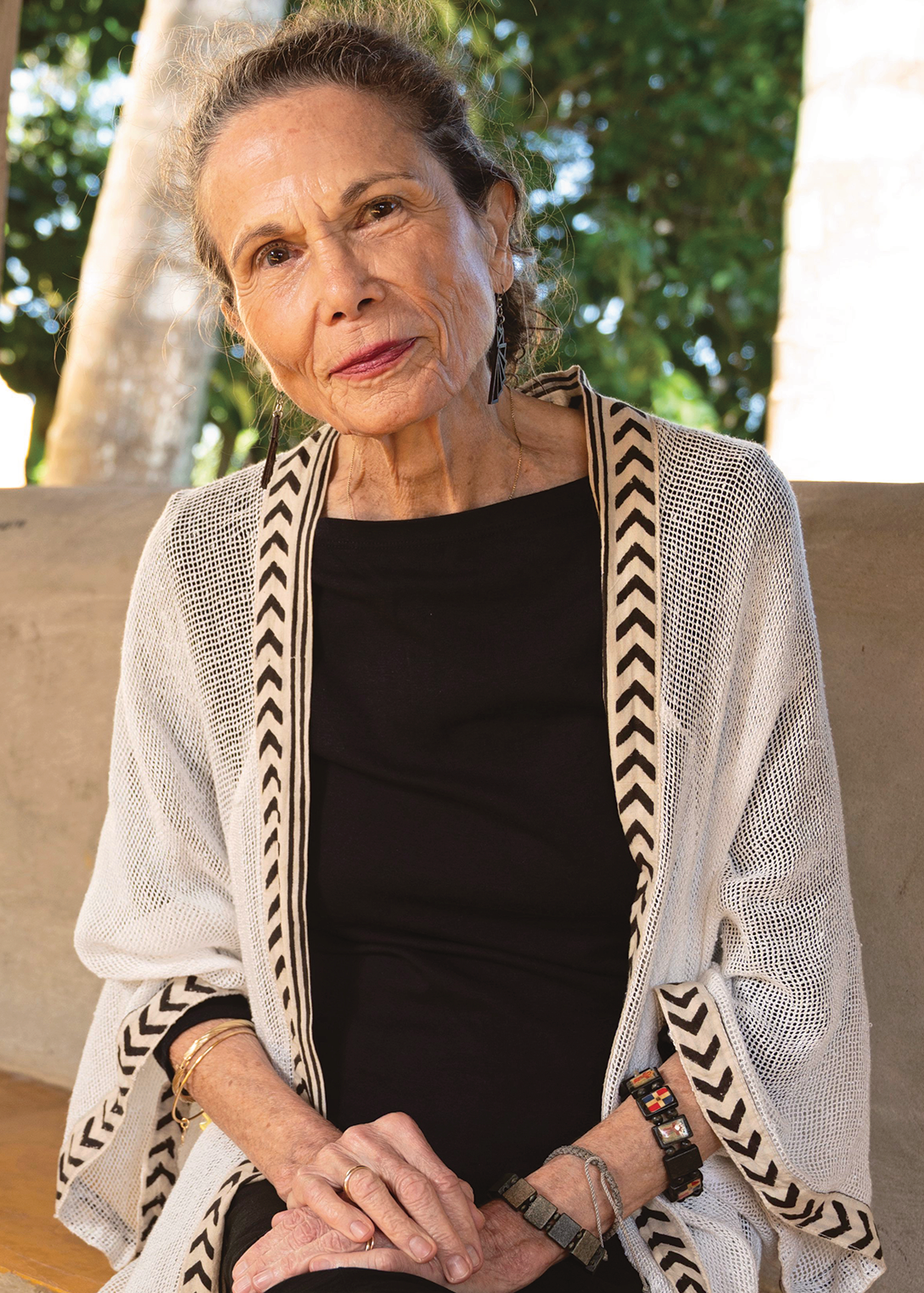
Julia Alvarez's latest poetry collection, Visitations, released by Knopf in April, brings together new poems and works spanning four decades to examine what she describes as “the landscape of aging.” Known for her significant contributions to literature since the 1990s, Alvarez began her career with the poetry collection Homecoming in 1984 and gained acclaim with her debut novel, How the García Girls Lost Their Accents, in 1991. At 76, Alvarez reflects on her role as a model for those facing the inevitability of aging, stating, “Not everybody’s Latin or female, but if they live long enough, they will get old. It’s the great democracy!” Her upcoming novel, The Cemetery of Untold Stories, set for release in 2024, continues this exploration with a focus on her identity as an 'old woman and a Latina.'
Read More
Visitations captures the various roles Alvarez has inhabited throughout her life—daughter, sister, writer, mentor, and teacher. With an autobiographical essence, the collection presents a meditation on memory, rooted in her Catholic upbringing and her affinity for storytelling. She learned about 'visitations' in catechism class through the story of the Virgin Mary and her cousin Elizabeth, emphasizing how poetry serves to invigorate life.
Although some perceived Alvarez as favoring fiction over poetry, fellow writer Sandra Cisneros asserts that Alvarez has always been a poet at heart. “When you are a poet, you see the world in a distinct way,” Cisneros said, reaffirming that Alvarez's poetic voice has simply taken center stage again with this new collection.
Alvarez's creative resurgence follows a personal crisis; in October 2021, she suffered a retinal detachment during the COVID-19 pandemic, losing sight in one eye. After multiple surgeries, she faced a new reality of adjusting her creative process. Contrary to her initial fears of panic, she found a sense of liberation, which she articulated in an April 2024 essay, stating that she had rekindled her love for writing.
Her literary journey began in the Dominican Republic under the dictatorship of Rafael Trujillo, which her family fled in 1960, immigrating to the United States. Alvarez's experiences in Queens became the foundation for her debut novel, which remains a key text in American literature. Over the years, she has authored seven novels, four poetry collections, and several works of nonfiction.
Alvarez gave up her tenured professorship to write full-time and continues to receive numerous accolades, including the National Medal of Arts awarded by President Obama in 2013. She emphasizes that writing is integral to her life, refusing to consider retirement.
In her new collection, Alvarez revisits her past, threading nostalgia and contemporary issues, as noted by writer Edwidge Danticat. Collectively, Danticat observes that Alvarez's work teaches readers to say goodbye in a way that feels freeing rather than sad, allowing Alvarez to navigate her life and experiences as both a child and an elder.
Throughout Visitations, themes of familial relationships and personal loss emerge. In one poem, she reflects on her sisters, culminating in a poignant tribute to her sister Maury, who passed away in 2015. Alvarez's exploration of identity also includes her marriage to Bill Eichner, expressing the complexities of love in later life.
Key poems like “Mami at Her Vanity” explore her mother’s influence on her life and artistry, while the collection addresses exile and the impact of dictatorship subtly woven into personal narratives. Alvarez's work highlights the profound connections between her family's experiences and the broader societal themes of identity, memory, and belonging.
The closing poem, “I Go Through the House Turning Off Lights,” captures the speaker's reflection on a chaotic world, echoing themes found throughout the collection. Alvarez does not identify as a political poet but feels a responsibility to be aware of current events through her writing.
In addition to her literary endeavors, Alvarez is actively involved in social initiatives in the Dominican Republic, co-founding a sustainable coffee farm and a center for girls' education. She continues to engage with her roots, seeing her storytelling as a form of activism.
Reflecting on her poetic journey, Alvarez expresses a desire for exploration and wildness in her later years. She believes writers late in life often seek to break away from conventional patterns, embracing the mystery of existence. With Visitations, Julia Alvarez invites readers to linger at her table, celebrating both the challenges and joys of her creative legacy.