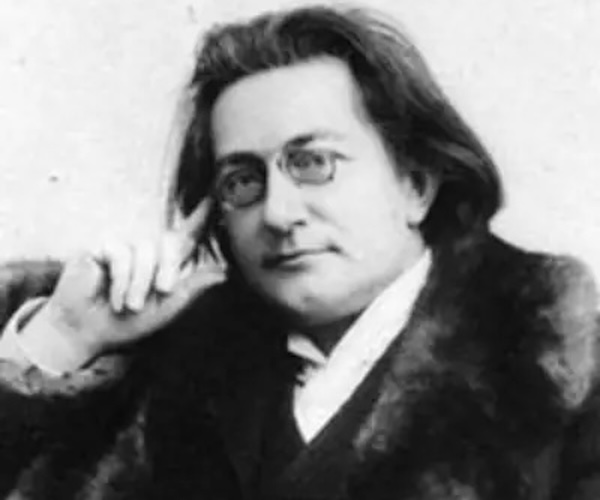
Cultural historian Joseph Horowitz explores the life of Anton Seidl, the influential conductor who served as Richard Wagner’s American apostle, in his new novel, The Disciple: A Wagnerian Tale of the Gilded Age (Blackwater Press, March 2026). Seidl, who arrived in the United States in 1885, became celebrated in New York but was nearly forgotten by the mid-20th century. Horowitz has dedicated years to unearthing Seidl’s impactful career, drawing from archives like the Seidl Archive at Columbia University and the Seidl Society Archive at the Brooklyn Historical Society.
Read More
Seidl was recognized as a key interpreter of Wagner’s works, including taking Wagner’s Ring Cycle on European tours. Horowitz revealed that Wagner encouraged Seidl to seek opportunities in America, predicting the conductor’s works would be more welcomed there than in Europe, a prediction that proved true.
To uncover Seidl’s legacy, Horowitz sifted through personal archives kept by Seidl’s wife and Laura Langford, a proactive impresario in the 1880s and 1890s. Horowitz described discovering a speech Seidl wrote on the democratization of music, emphasizing the importance of poor people experiencing opera. Through his research, Horowitz felt a deep connection to Seidl, which aided in crafting a narrative that brings the Gilded Age’s musical atmosphere to life.
In discussing why he believes American classical music peaked during the 1890s, Horowitz noted that the focus at that time was on establishing an American canon rather than on celebrity conductors. He advocated for recognizing other influential figures of the era, such as Henry Higginson and Theodore Thomas, alongside Seidl.
Horowitz elaborated on the cultural landscape in Brooklyn during Seidl’s tenure, indicating that the arts provided a rich tapestry that is often overlooked, overshadowed by images of elitism in opera houses. He emphasized that the late 19th century was a time of significant engagement with the arts, contrary to the perception of it being a period characterized solely by wealth disparity.
His book also highlights the national music scene, noting significant works from composers like Dvořák and Ives emerging during this time. Horowitz ultimately views his work, including The Disciple, as a necessary reevaluation of the Gilded Age and its contribution to American culture.
Horowitz's transition to writing fiction stemmed from a desire to create a narrative engaging to a younger audience, serving as a bridge between history and storytelling. He classified his work as “creative nonfiction,” bridging the gap between fact and imagination. His narrative approach is intended to enhance understanding of the historical context, effectively merging scholarly research with lively storytelling.