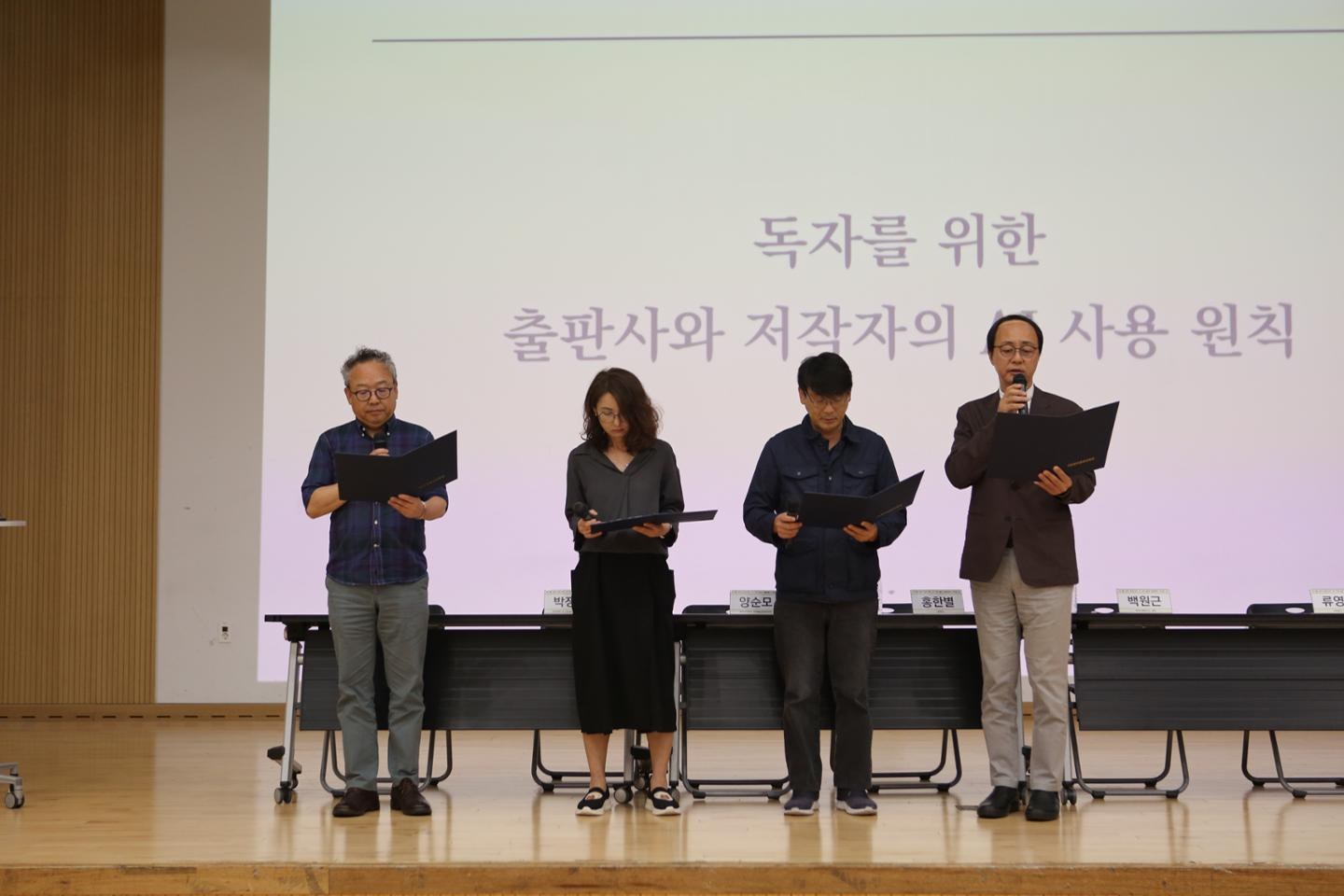
The Korea Publisher Society has released a set of principles regarding the use of artificial intelligence (AI) in publishing, aiming to address the rise of mass-produced “click-to-publish” books. This initiative marks a significant step for South Korea's publishing sector as it establishes voluntary guidelines to maintain the integrity and trustworthiness of books in the AI era.
Read More
The Principles for the Use of AI by Publishers and Authors for Readers were unveiled at a forum held at Mapo Central Library in Seoul on Tuesday. The document consists of five chapters and 20 articles, crafted with input from eleven organizations, including the Writers Association of Korea and the Critics Alliance.
These principles are the first of their kind in the publishing industry and include provisions for establishing identification systems for AI usage, guidelines for training data, and recommendations concerning contracts. While not legally binding, they emphasize human authorship, stating that individuals are the core agents in book creation and ultimately accountable for their content.
Yoon Sung-hoon, chairman of the Publisher Society’s AI Future Strategy Committee, remarked that AI functions solely as a tool and does not hold author status. He stressed the importance of disclosing when AI is utilized in the publishing process and ensuring rights holders’ consent and fair compensation when their works are used as training data.
During the forum, Ryu Young-ho from Kyobo Book Centre highlighted the need for clear procedures when addressing failures in AI disclosure as well as the necessity to protect translator copyrights and support the translation ecosystem.
Hong Young-wan, chairman of the Korea Publisher Society, assured that these guidelines are not intended to reject AI technology. He acknowledged the ongoing need to revise existing laws, including the Publishing Culture Industry Promotion Act and the Copyright Act, while expressing commitment to enhancing institutional frameworks that could benefit the publishing industry.