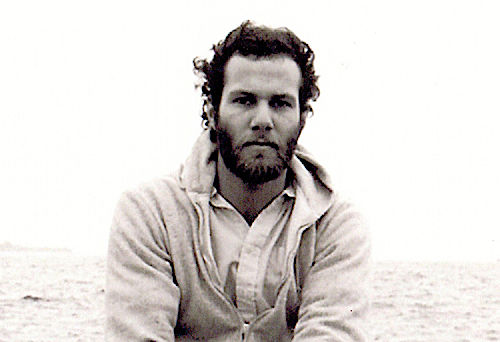
In Nags Head, North Carolina, 1978, Henri Cole reflects on his solitary life as a poet while living in a bright apartment in Boston’s South End. Raised in a large Virginia family, he possesses a polite demeanor typical of Southern gentlemen, paired with a strong will. Cole’s workspace features artworks by female artists, such as Kiki Smith and Jenny Holzer, with a striking etching of a fawn symbolizing the precision and depth present in his poetry.
Read More
Cole has authored eight poetry collections, with a new book titled Nothing to Declare set for release next spring. His accolades include the Lenore Marshall Poetry Prize and the Kingsley Tufts Poetry Award. Currently, he teaches at Ohio State University and serves as the poetry editor for The New Republic.
During an interview conducted over three sessions last winter, Cole demonstrated genuine interest in the interviewer’s work. He distinguishes his approach to poetry from confessional styles, emphasizing that he is an autobiographical poet. Cole states that his poetry is driven by artistic expression rather than personal revelations, focusing instead on the craft of creating art from language.
He acknowledges the inherent personal nature of his poems, attributing this intensity to careful artistic control rather than emotional therapy. His experiences in Rome, where he connected deeply with the themes of pain and suffering in Italian art, prompted a stylistic shift in his writing. Many poems from his collection The Visible Man emerged during this period of reflection.
Cole asserts that poetry does not need to comfort or provide moral guidance. Instead, he views it as an exploration of dissonance and a reflection of the self, reminiscent of Gerard Manley Hopkins’s sonnets that embrace darkness. While he admires poets with a strong ethical stance, Cole believes in prioritizing truthfulness and originality over a defined moral narrative.
Initially, Cole utilized nature to mask his emotions, as seen in his earlier works. He later embraced a more straightforward approach in The Visible Man, shedding lyrical constraints that he felt had limited his expression. Cole's later collection, Middle Earth, marked a stylistic evolution influenced by his time in Japan, where he sought to incorporate the sincerity and simplicity of Japanese poetry into his own writing. His experiences in a remote setting led him to explore themes of solitude and contentment, culminating in poems characterized by a minimalist style and introspective nature.
Cole notes that while he attempted to learn the Japanese language, it was through studying tea ceremony that he found a metaphor for his poetic aspirations, aiming for an elegant simplicity that would resonate through his work.