For centuries, the dream of overcoming language barriers has driven efforts in translation. Sci-fi authors proposed universal translators, while linguists created international languages, all aiming for a world of mutual understanding.
Read More
Recent advancements in artificial intelligence have prompted optimism about achieving this goal. Currently, AI tools are utilized by lawyers for translating legal documents, by Harlequin for publishing novels in multiple languages, and by hospitals for communicating with patients in various languages.
Despite the impressive speed and efficiency of these AI translation tools, a critical challenge remains: the translation of poetry.
Translating poetry is fundamentally a human endeavor, requiring not only fluency in two languages but also a profound understanding of the diverse cultures they represent. Literary critic Gayatri Chakravorty Spivak refers to this necessity as a “worlding” of language and culture.
Studies reveal that when scholars examine chatbot-generated poetry, they often find these works to be more homogeneous compared to human-written poetry. The same shortcomings appear in AI poetry translations, which struggle particularly with conveying metaphor, complex sentence structures, and emotional nuances.
To illustrate these limitations, I collaborated with Adeeba Shahid Talukder, an award-winning poet and translator, on this article and translated Faiz Ahmed Faiz’s 1953 poem “Mulāqāt,” or “Meeting.”
Faiz, a prominent Urdu poet born in 1911 in Sialkot, faced a tumultuous relationship with the newly formed Pakistan after the Partition in 1947. His poetry skillfully intertwines personal longing with political themes, making his works notoriously challenging to translate due to their ornate metaphors that lack direct equivalents in English.
During a period of imprisonment from 1951 to 1955, Faiz penned some of his most significant works, including “Meeting,” in which he explored themes of separation and yearning, particularly as he was distanced from his family.
In our translation of the opening lines of “Meeting,” we wrote:
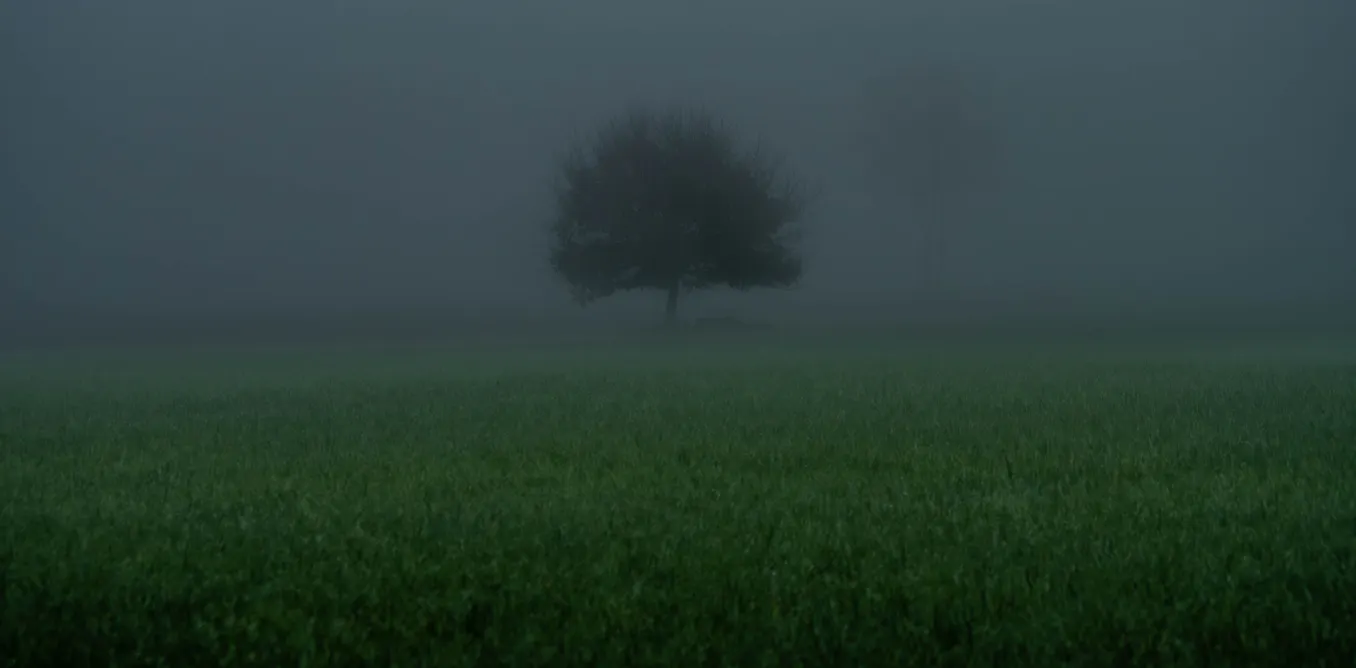
This night is the dark,
lush tree of a grief greater
than you and I—
greater, for caravans
of torch-bearing stars
have lost themselves
in the siege of its branches;
in its shadow, a thousand moons
have wept away all their light.
In contrast, when ChatGPT translated these lines, it produced:
This night is a tree of pain,
vaster than you, vaster than me.
While the chatbot’s version is technically correct, it misses the depth and complexity of the original metaphor. Additionally, ChatGPT's translation inaccurately confuses phrases and reflects a lack of emotional depth, failing to grasp the nuances of grief and beauty conveyed in Faiz's poem.
Ultimately, AI struggles to express human emotion effectively. Despite efforts to convey the wonder of the original text, the chatbot's translations diverge significantly from the heart of the poetry. Its application of imagery and description often feels disjointed and lacks coherence when compared to the subtleties of the original Urdu.
This disconnect highlights a fundamental truth: AI cannot replace the literary translator. As A.K. Ramanujan stated, “only poems can translate poems.”
Adeeba Shahid Talukder contributed to the research and writing of this article, as well as the translation of Faiz's poem.