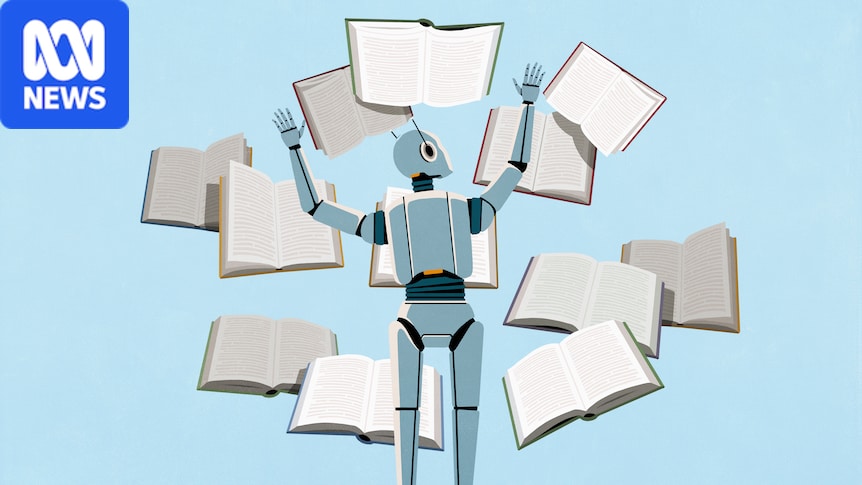
The Australian book publishing industry is facing increasing challenges due to the rise of artificial intelligence (AI), raising questions about its viability and future. Headlines have reported a surge in AI-generated submissions overwhelming publishing houses, and there have been accusations against multiple literary prize winners for using AI this year.
Read More
Louise Doughty, a judge for the 2026 Commonwealth Short Story Prize, has expressed concern about the potential existential threat AI poses to traditional publishing methods. She noted, "We're only at the beginning of understanding the depth of that threat, and how we can combat it."
As readers attempt to distinguish AI-generated texts, Professor Matthew Rubery from Queen Mary University highlighted various indications or "tells" that might signal such content, including awkward phrasing and repetitive structures. He emphasized that these signs are evolving rapidly, making it difficult for readers to consistently identify AI usage.
To address these challenges, some are advocating for a "human-authored" certification, a system designed to verify the authenticity of authorship through methods like author interviews and edit histories. Trevor Woods, CEO of Proudly Human, noted a significant uptick in interest in such certifications, forecasting it could develop into a lucrative new industry, potentially worth billions.
Doughty further cautioned that as detection tools for AI-generated writing become more prevalent, they risk leading to false accusations against authors, particularly new writers who lack a substantial body of work for comparison. She urged the publishing industry to exercise caution when using these diagnostic tools, as unfounded claims could harm careers.
Last week, advocacy groups such as the Australian Publishers Association presented their concerns to a Joint Select Committee on artificial intelligence, suggesting that government regulations should mandate the disclosure of AI usage in published texts. However, there is apprehension that the government may prioritize the interests of tech companies over traditional authors.
Concerns extend to potential changes in copyright law, which could allow tech companies to use authored works without permission under an "opt-out" system. Louise Stark from Hachette Australia criticized this proposal, stating it reverses the fundamental principle of needing permission to use someone else's work.
The Australian Society of Authors has also pointed out that the issues are not hypothetical; many authors have already seen a decline in income due to AI-generated outputs that replicate their work. Author Kylie Moore-Gilbert, for instance, noted that her memoir had been reproduced in AI-generated summaries, impacting her sales and royalties.
While over 150 legal cases regarding generative AI have been initiated in the US, the outcomes have yet to clarify the enforcement of copyright infringements, allowing AI-produced books to potentially undermine authors’ compensation. Stuart Glover from the Australian Publishers Association noted that AI has also contributed to an overall softening in the non-fiction market, particularly impacting reference-heavy books.
As the discussions continue, Eileeen Camilleri of the Australian Copyright Council stressed that for copyright protections to exist, the work must be humanly authored, indicating that AI-generated content lacks such protections. There is a growing emphasis on ensuring clear authorship amid evolving technology, with the final report from the Joint Select Committee on Artificial Intelligence expected by November 30.