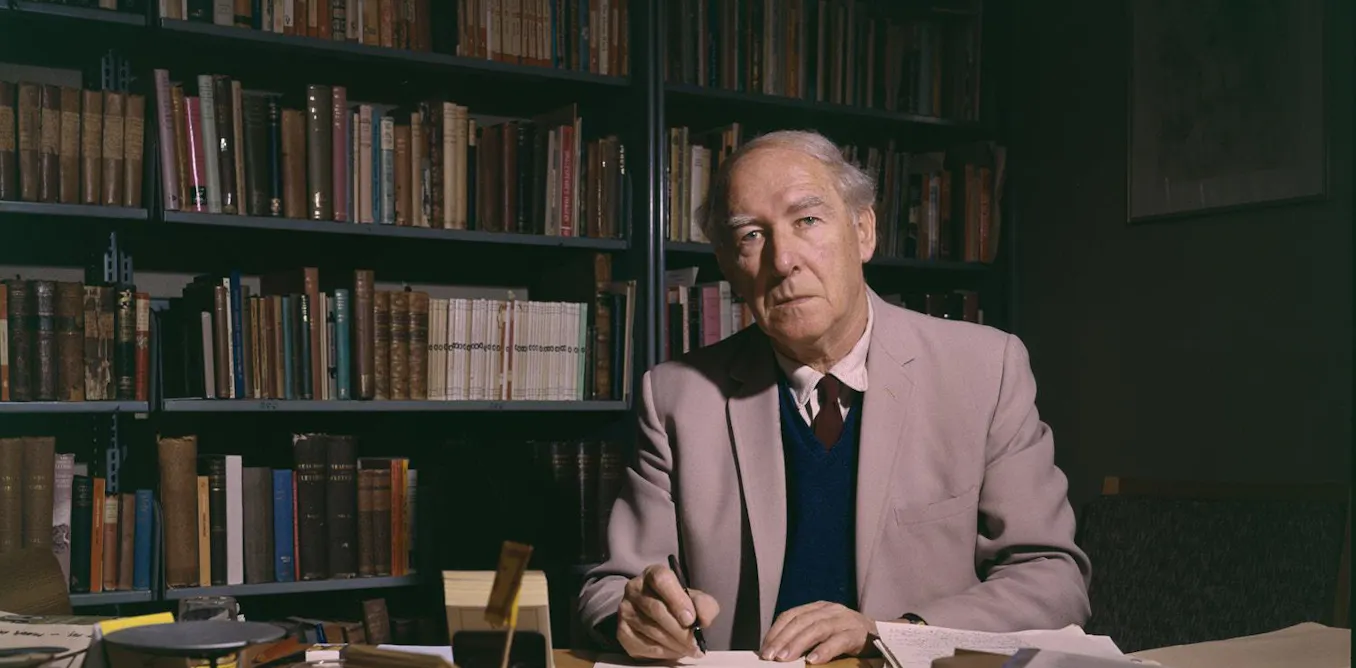
The biography *A.D. Hope: A Life* by Susan Lever encourages a reexamination of Alec Derwent (A.D.) Hope’s literary legacy. Although Hope, a prominent Australian poet and professor who lived from 1907 to 2000, has a canonical status, many readers, including those teaching Australian literature, have often overlooked him in favor of contemporary writers addressing feminist, environmental, postcolonial, and experimental themes.
Read More
Hope's most anthologized poem, "Australia" (1943), depicts the country through the unsettling metaphor of a menopausal woman, a perspective that some readers find problematic due to its omission of Australia’s First Peoples. This has led to questions about the relevance of Hope's work today.
Lever's biography prompts readers to revisit Hope’s contributions to Australian literature, particularly during the postwar period, framing him as an influential figure whose work merits deeper exploration. The book not only provides a thorough account of Hope’s life and career but also sheds light on the philosophical depth, formal brilliance, and emotional intensity of his poetry.
The narrative reveals contradictions in Hope's life: as a suburban father, a philanderer, a professor, and a mentor, while simultaneously reflecting on how these tensions informed his poetic output. Hope's university experiences, including a stellar undergraduate career at Sydney and a disappointing degree at Oxford fostered his fascination with psychology and classical literature. This appreciation of the neoclassical tradition led him to resist the predominant post-romantic forms of his era, advocating instead for discursive styles such as narrative poetry and satire, which he believed facilitated complex thought.
Hope’s poetry, characterized by its dark humor and disciplined form, addresses enduring questions about life and humanity. His works reveal intricate layers of meaning while grappling with themes of masculinity, sexuality, and desire. Lever does not shy away from Hope’s flaws; she acknowledges moments of patriarchal representation in his poetry but argues that these also reflect his internal struggles.
Throughout the biography, Lever explores how Hope's upbringing and later experiences shaped his worldview and poetic voice. Notable poems like "Observation Car" illustrate his awareness of the passage of time and existential dread, while his more provocative verses often received scrutiny for their depictions of women.
Lever suggests that, despite some criticisms, Hope's poetry remains relevant as it taps into a quest for spiritual meaning within a secular, scientific modernity. It raises questions about our understanding of reality, echoing contemporary concerns.
The biography also emphasizes Hope’s connections with other literary figures and the impact of geographical isolation on his work and recognition. While drawing parallels to writers like W.H. Auden, Lever clarifies that Hope's style exhibits both similarities and distinctions to Auden's work.
Despite facing challenges, Lever illustrates how Hope’s poetry and academic pursuits intertwined, establishing him as a central figure in the development of Australian literature. She effectively underscores the significance of this first biography, arriving over two decades posthumously, as both a timely and necessary tribute to a complex literary figure.
With a renewed appreciation for Hope’s work, readers can find much to engage with in his poetry, such as the late poem "A Swallow in the House" (1991), which reflects on bewilderment and self-awareness in the context of contemporary life. Lever’s biography thus not only restores Hope’s place in the literary canon but also invites ongoing dialogue about the evolution of Australian poetry.