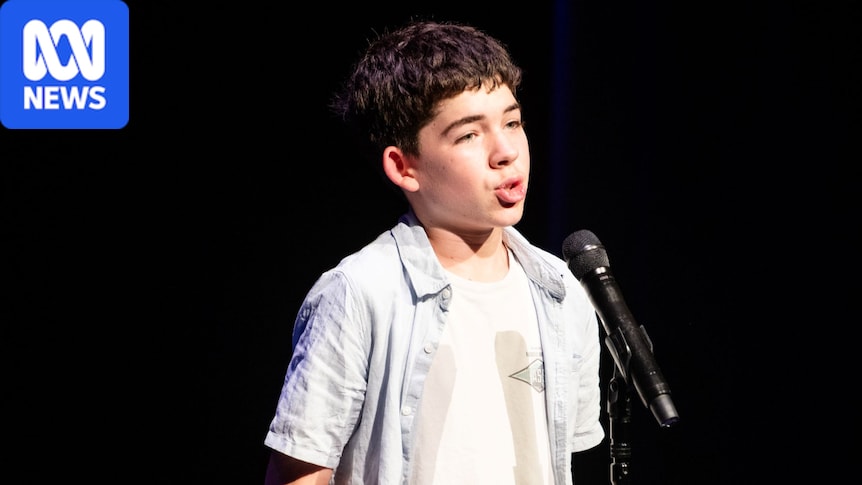
Twelve-year-old Blake Mackenzie emerged victorious at the 2026 Australian Poetry Slam finals held at the Sydney Opera House, marking a significant achievement in his budding poetry career. Only two months prior, Mackenzie was introduced to slam poetry by his Year Six teacher, who encouraged him to submit his work to a competition after being impressed by his initial poem.
Read More
Mackenzie successfully progressed through his local Newcastle heat and the New South Wales state final to reach the national competition, where he performed two poems: "I Love My Country," addressing racism and inequality in Australia, and "Dear ChatGPT," which reflects on the influence of artificial intelligence in daily life. His performances led him to be named the 2026 Youth Champion, an experience he described as "a dream," stating he felt adrenaline coursing through him during his performance.
Also recognized at the event was Central Australian poet Bivor, who came to Australia from Bangladesh three years ago and was awarded the title of 2026 Adult Champion. Bivor performed two poems titled "Ourselves" and "Politics Is Doing You," emphasizing the need for political awareness among the public. Together, Mackenzie and Bivor will share a $20,000 prize package that includes publishing opportunities and invitations to perform at literary festivals both in Australia and internationally as 2026 Australian Poetry Slambassadors.
Slam poetry, which originated in Chicago in the 1980s, allows for various forms of creative expression performed in competitive settings. Miles Merrill, the CEO of Words Travel, explains that the genre is defined more by its performance aspect than its literary structure. Contestants typically have two minutes to perform, with randomly selected judges rating their presentations based on literary quality, performance, and emotional impact.
Arantza García Ferrand, the 2025 Australian Poetry Slam champion, highlights that successful slam poetry combines strong writing with engaging performances, emphasizing the need for accessibility to connect with diverse audiences. Mackenzie shares his advice for aspiring slam poets: focus on authenticity and enjoy the process of self-expression, rather than being distracted by competition or scoring.