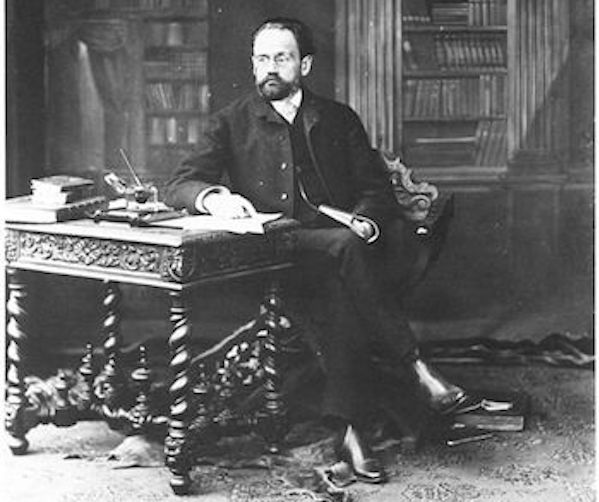
In August 2020, Oxford University Press released an English translation of Émile Zola's Doctor Pascal, marking the first time the entire 20-book Les Rougon-Macquart series was available under a single publisher. Doctor Pascal, completed in 1893, serves as the conclusion to Zola's extensive exploration of modern French society through the struggles of a single family plagued by hereditary issues. The novel grapples with the ideas of fate and chance while contemplating a possible closure to the series, balancing between pessimistic decay and a glimmer of hope for the future.
Read More
The story centers on Doctor Pascal Rougon, an aging physician and experimental geneticist who has dedicated his life to studying the hereditary maladies of his family. As he seeks to protect his research from threats posed by his essential family members—a religious servant, a skeptical niece, and an overbearing grandmother—tensions arise, especially when Pascal develops a complicated romantic relationship with his niece, Clotilde. This intertwining of personal and scientific exploration highlights Zola's continuous themes of love, loss, and the quest for truth.
Brian Nelson, a Zola scholar, notes that Zola uses Pascal as a reflection of himself, grappling with both the narrative’s stakes and the controversies surrounding it. During the period of writing Doctor Pascal, Zola had his own tumultuous love affair, which influenced the emotional weight of the novel. Despite criticisms labeling it anticlimactic, translator Julie Rose vehemently disagrees, emphasizing its lyrical intensity and depth.
In her translation, Rose detailed the arduous process involving multiple drafts to capture Zola's emotional and lyrical essence. She pointed out that Doctor Pascal had received limited attention historically, with earlier translations dating back to the 19th century. Rose believes the neglect may have contributed to its perception as a weaker work within the series but contends that it offers a poignant and reconciling conclusion to the saga.
The novel diverges stylistically from other entries in the Rougon-Macquart series, focusing heavily on intellectual discourse. Rose attributes Doctor Pascal’s thematic currents to contemporary issues, such as scientific inquiry versus superstition, and the significance of understanding genetic inheritance—topics that resonate today. She also applauds Zola’s vivid portrayals of the South of France, evoking a stark and beautiful landscape that supports the narrative.
Rosy discusses the complex portrayals of femininity in the novel, notably through the three women surrounding Pascal, each representing different aspects of nurturing and conflict. Zola skillfully depicts their relationships, highlighting the domestic struggles and fierce ideologies that shape their interactions.
Rose reflects on translating Zola's meta-fictional insights, as Pascal's research connects directly with the lives depicted in the Rougon-Macquart series. The autobiographical elements regarding Zola's own life further frame the work, solidifying the connection between the author and his creation.
The challenges of translation remain, requiring Rose to balance fidelity to Zola's dense, intricate prose while ensuring accessibility for contemporary readers. She notes that both the harrowing and poetic moments in Doctor Pascal were demanding yet rewarding to translate, allowing the essence of Zola’s work to engage new audiences.
The reception of the translation has been positive, and Rose's efforts to convey the emotional depth of Zola’s narrative have been well received. As discussions around the themes in Doctor Pascal become increasingly relevant, particularly in today’s socio-scientific climate, Rose believes that Zola’s narrative of love and loss will resonate powerfully with readers.