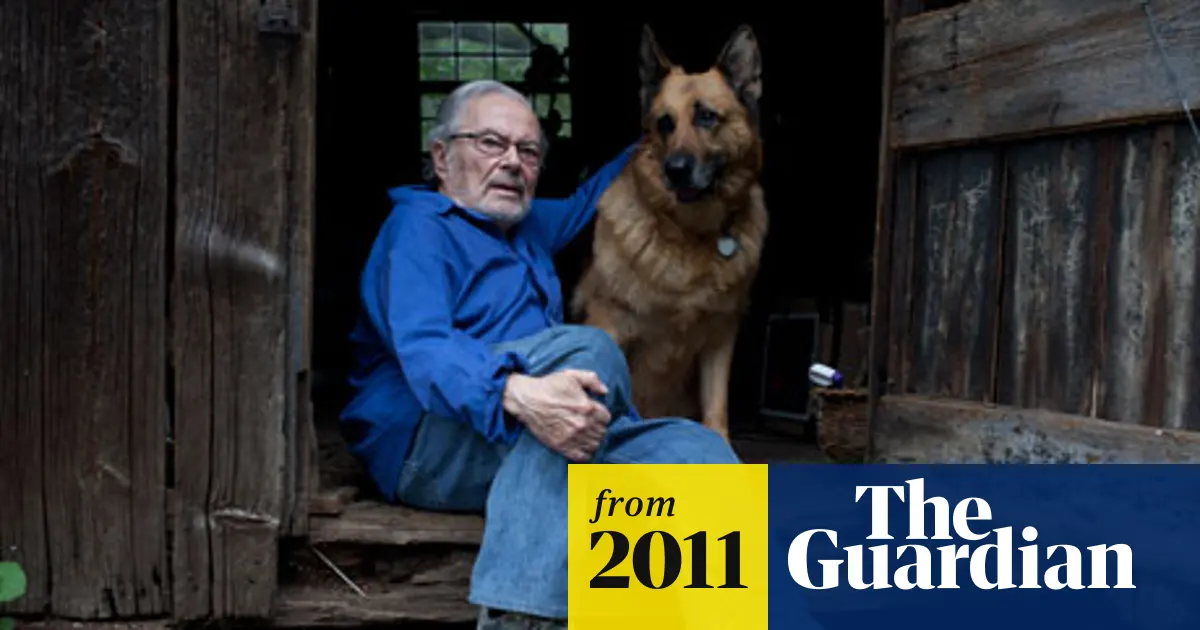
Maurice Sendak, the acclaimed author and illustrator, reflects on his life in his Connecticut home, a residence he's occupied for 40 years. Recently widowed, he now lives alone with his dog, Herman, a large Alsatian. As Sendak works on a jigsaw puzzle of a monster from his famous book, Where the Wild Things Are, he makes a humorous remark about Herman's unawareness of his Jewish heritage.
Read More
At 83, Sendak is candid about his frustrations with modern society, expressing disdain for eBooks, criticizing the chaos of New York City, and denouncing the American political landscape. He laments the influence of Rupert Murdoch on publishing, noting the decline of good taste in media but acknowledges his continued association with Harpers, a Murdoch-owned company.
Sendak’s literature often communicates complex emotions, reflecting his challenging childhood. His familial monsters, depicted in his works, stem from his early experiences with relatives who were immigrants from Poland, struggling with language and despair during the lead-up to the Holocaust. This backdrop influenced Sendak's portrayal of childhood as sometimes terrifying, urging children to confront rather than shield themselves from darker realities.
In his latest book, Bumble-Ardy, he tells the story of a piglet losing his parents tragically, illustrating that while moments of joy exist, darkness is ever-present. Sendak emphasizes his commitment to honesty in writing for children, rejecting the notion of preserving their innocence by avoiding hard truths.
His parents' complex backgrounds shaped his views. His mother emigrated from Poland at a young age due to familial strife, while his father faced the burden of familial loss after losing his entire family in the Holocaust. This personal history has greatly influenced Sendak's artistic mission.
Despite the tragedies of his family, Sendak has found eventual peace, reminiscing about his near 50-year relationship with his partner Eugene. Though he acknowledges a pain that lingers in his loneliness since Eugene's passing, he recognizes his good fortune in life and work, stating that he is currently engaged in creating another book.
Sendak, known for his strong opinions, doesn't shy away from expressing his views on contemporary culture and figures, candidly critiquing other authors and public personalities. He seeks a fulfilling ending to his life, referencing the poetic death of William Blake as an ideal, and optimistically entertains the possibility of a "yummy death."
As he looks ahead, Sendak continues exploring literature and art, stating, "life is pretty dreadful most of the time," but reminding himself that he is fortunate to have created work that resonates deeply with readers.