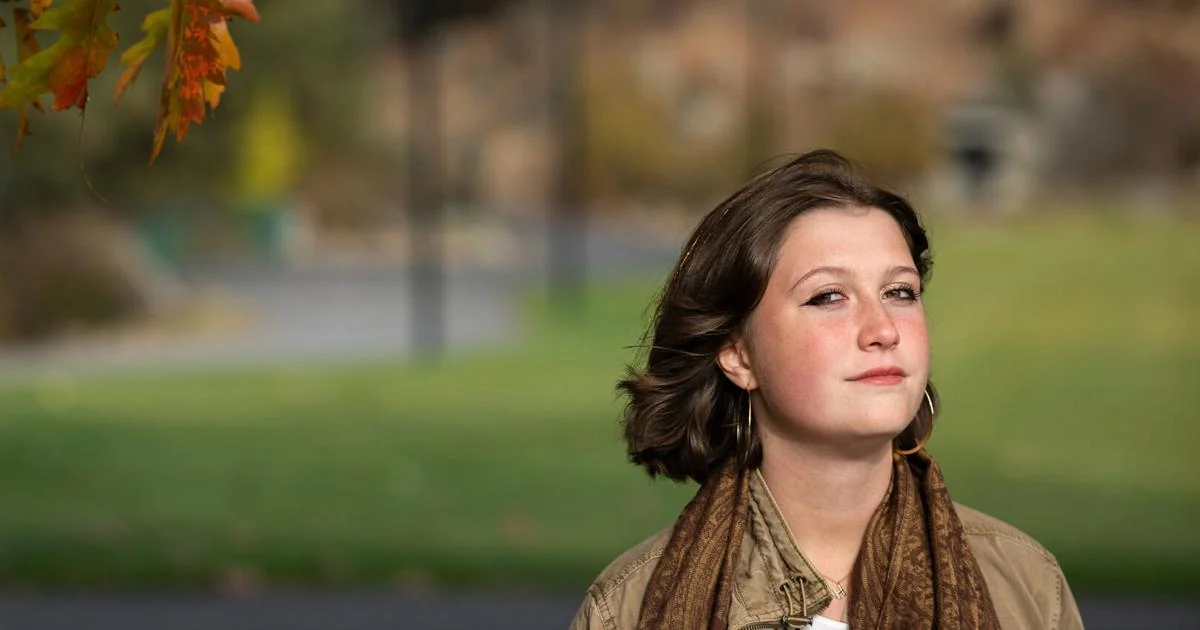
Hope Austin has been appointed as Spokane’s first Youth Poet Laureate, inspiring her peers to embrace poetry.
Read More
Austin's journey with poetry began in her childhood. "I first started writing poetry when I was little," she recounted, though she admits her early efforts were not impressive. During her freshman year at University High School, she participated in speech and debate and was introduced to spoken word poetry. When her coach sought a participant for the category, Austin volunteered, thinking, "I’m a good enough writer, so why wouldn’t I try?"
Her spoken word performance consisted of an original poem about her father, who passed away when she was 10. After winning the event, she began to see spoken word as a powerful means of self-expression. "I won state and thought, ‘Maybe I should keep doing this!’" she said.
Meanwhile, Spokane Poet Laureate Mery Smith was developing the Youth Poet Laureate Program with Spokane Arts. "It began long before I even started my term as Poet Laureate," Smith remarked. By early 2026, applications for the role opened, and former Spokane Poet Laureate Mark Anderson encouraged Austin to apply. The application required poets aged 14 to 17 to submit a resume, two to three original poems, and a cover letter, along with a commitment to organize public readings and collaborate on poetry projects.
Austin received the news of her selection in May, expressing disbelief at her achievement: "I got the email and I was like, ‘Am I being pranked right now?’" Smith was given an additional year in her term to help establish the Youth Poet Laureate program, emphasizing the importance of mentorship.
Almost six months into her role, Austin has been actively learning from Smith and participating in various workshops to engage other young poets. "I think the thing I’ve learned the most is that Spokane has so much more to offer than I thought," she noted, highlighting the city’s vibrant arts scene.
Smith praised Austin's fearless approach to poetry, noting her strengths in performance compared to her own inclination toward page poetry. "She’s incredibly brave and says the things and asks the questions and does it all," Smith observed.
At a recent workshop with Spark Central, Austin demonstrated her talent by quickly composing and performing a poem, captivating her audience. "I think I like poetry because it’s such an abstract way of writing," she said, citing her inspiration from poet Mary Oliver and her familial creativity. "I have a lot to say."
In her poem titled "KNOCK ON WOOD," Austin explores themes of anxiety and hope through the perspective of her mother, vividly intertwining sensory details with emotional depth.