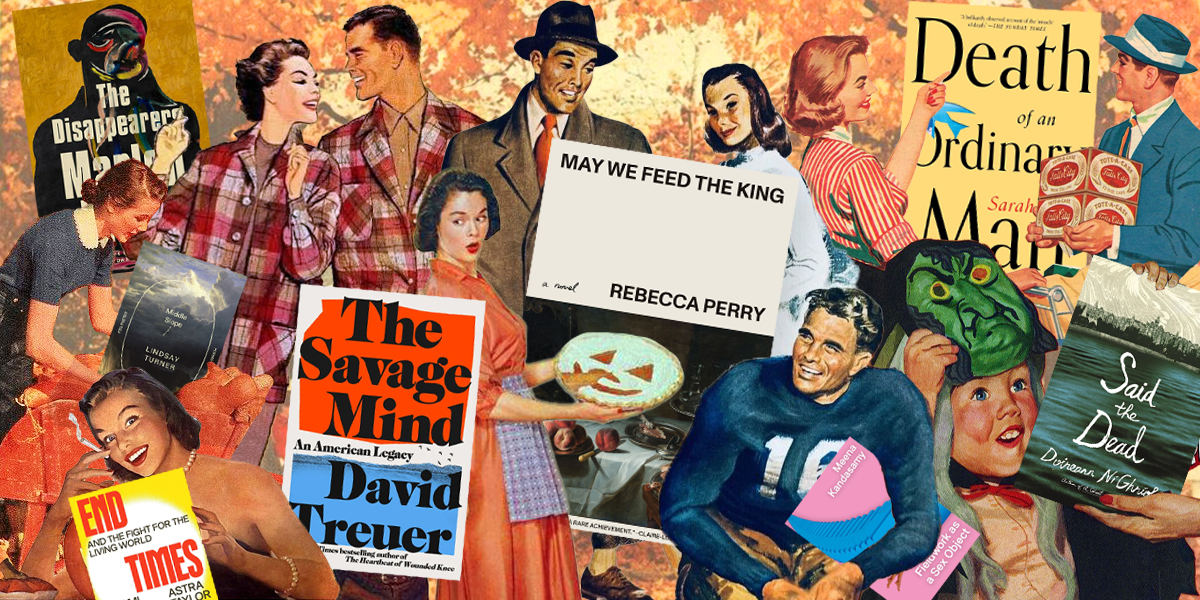
As the weather transitions to fall, the literary world gears up for its busiest publishing season. This year’s lineup promises diverse and compelling reads, reflecting the unique emotional shifts that accompany the change in seasons. Here’s a selection of noteworthy titles that the Lit Hub staff highly recommends.
Read More
**Marlon James, The Disappearers** (Riverhead, September 1)
Marlon James’ latest novel is generating significant buzz and controversy. Set in 1980s Kingston, it follows a group of queer men rehearsing a play who subsequently face horrific violence, leading to themes of revenge and survival. The work intertwines historical context with a vivid exploration of human desire and brutality, delivering a gripping 600-page narrative.
**Emily Skaja, Black Lake** (Graywolf Press, September 1)
Skaja's poignant poetry collection delves into grief, exploring the speaker's experience with multiple miscarriages in an increasingly cruel world. The work is darkly humorous and surreal, reminiscent of Sylvia Plath, yet anchored in contemporary emotional landscapes.
**Chloe Benjamin, Under Story** (Putnam, September 1)
This speculative novel centers on Laurel at a research base in Antarctica, grappling with the aftermath of personal loss. Through a portal, she aims to reverse time and redo her past, exploring profound themes of grief and the passage of life.
**Scott Hawkins, Blacktail** (Crown, September 1)
In Hawkins' long-awaited follow-up to *The Library at Mount Char*, the narrative follows a wolf named Blacktail, examining the cruelty of humanity through the eyes of animals. The book tackles environmental themes with striking emotional weight.
**Carson Jordan, Dead Hand** (B L U S H, September 1)
Jordan’s poetry collection employs a surreal lens to explore themes of redemption amid chaotic environments, reflecting on personal and societal struggles.
**Laura Anne Whitley, Romanticizing Kyle** (Feral Dove, September 4)
Whitley’s poems merge visual language with deep emotional storytelling, capturing moments that resonate on both personal and cultural levels.
**Emma Cline, Switzy** (Random House, September 8)
Cline’s novel follows David Hastings, a retired executive navigating his deteriorating mental state. The narrative explores the complexities of memory and existence, maintaining a tense emotional focus throughout.
**Saul Williams, Songs My Mother Taught Me** (Haymarket, September 8)
This work encompasses both memoir and activist manifesto, chronicling Williams’ journey through art and social justice, and urging fellow artists to engage critically with societal issues.
**Bo Wang, The Chinese Lady** (HarperVia, September 8)
Wang's historical novel follows the first Chinese woman brought to America, weaving a rich tapestry of her experiences across various cities and contexts, fostering a narrative of resilience and identity.
**Assal Rad, Don’t Say Palestine** (Knopf, September 8)
Rad critiques Western media portrayal of Palestine, shedding light on the erasure of Palestinian voices during conflicts, making this an important read for those seeking a deeper understanding of the issue.
**Astra Taylor & Naomi Klein, End Times Fascism** (FSG, September 15)
In this collaboration, the authors analyze the rise of apocalyptic politics, urging readers to question prevailing narratives about democracy and societal collapse.
**Emily St. John Mandel, Exit Party** (Knopf, September 15)
This novel presents a dystopian celebration in 2031 Los Angeles post-civil war, exploring alternate realities when doppelgangers of party guests emerge from different timelines.
**Mark Leidner, Elegy for Pangaea** (Fonograf, September 15)
Leidner infuses humor into his collection while exploring profound themes of parenting, loss, and the absurdity of life through inventive, engaging poetry.
**Kate Atkinson, Our Noble Selves** (Doubleday, September 15)
Atkinson’s latest work mixes workplace comedy with espionage amidst postwar Britain, showcasing her knack for intricate, engaging storytelling.
**Doireann Ní Ghríofa, Said the Dead** (FSG, September 22)
In this captivating narrative, Ní Ghríofa revives the voices of women from a Victorian asylum, blending the past with the present in a haunting exploration of women's stories.
**Madeline ffitch, Avalon, Rise** (FSG, September 22)
This politically charged novel depicts a small Appalachian town grappling with rising extremist ideologies, exploring the messiness of local activism and personal relationships amidst national tensions.
**Min Jin Lee, American Hagwon** (Cardinal, September 29)
Following the Koh family across different countries, Lee’s family saga captures struggles with ambition and values amidst various crises, remaining engaging and grounded in emotional truth.
**Rebecca Perry, May We Feed the King** (Transit Books, September 29)
Perry’s novel invites readers into the mind of a curator staging historical rooms, blending historical inquiry with artistic expression, and examining the limits of narrative.
**Deesha Philyaw, The True Confessions of First Lady Freeman** (Mariner, September 29)
As sharp and witty as it is engaging, this novel dives into the life of Scharisse Freeman, offering a humorous yet critical look at social ascent and personal scandal in a black mega-church context.
**Hernan Diaz, Ply** (Riverhead, September 29)
This ambitious novel explores a future dominated by electricity, intertwining a caper narrative with deeper metaphysical questions of existence.
**Tom Overton, John Berger: From Life** (Verso, September 29)
A biography of John Berger, this work blends traditional narrative with creative forms, paying tribute to the influential artist through both personal and historical lenses.
**Ben Eastham, The Floating World** (Astra House, September 29)
Eastham's debut unfolds within the surreal confines of a doomsday refuge, blending humor with a commentary on moral ambiguity in contemporary society.
**Jonathan Lees, August** (Lethe Press, October 1)
This genre-defying novella explores themes of personal identity and societal critique through the lens of a returning veteran ostracized by his family.
**Lydia Millet, Fair Ones** (W.W. Norton, October 6)
Millet’s double narrative portrays two women grappling with loss following the death of a friend, navigating their grief through both mundane and extraordinary experiences.
**Sarah Perry, Death of an Ordinary Man** (Mariner Books, October 6)
Perry's insightful memoir examines the nuances of impending death, offering a tender tribute to her father-in-law while addressing broader themes of mortality.
**Meghan O’Gieblyn, Will and Attention** (Doubleday, October 6)
This introspective examination intertwines personal struggles with broader philosophical questions about desire and existence, delivering a thought-provoking narrative.
**Sophie Robinson, Prairie Oyster** (University Of Iowa Press, October 6)
Robinson’s novel weaves together multiple genres, showcasing the tumultuous journey of its characters with raw honesty and keen vulnerability.
**David Treuer, The Savage Mind** (Little, Brown, October 6)
This epistolary treatise blends memoir and historical analysis, exploring Native life and the mythos of the American frontier while addressing deep familial connections.
**Colin Bramwell, Fetch & Other Stories** (October 13)
Bramwell's debut poetry collection combines musicality and humor, inviting readers into a world of playful language and poignant observation.
**Wendy S. Walters, A Dead White** (Scribner, October 13)
Through a captivating exploration of the color white in societal contexts, Walters offers profound insights on art, culture, and our everyday choices.
**Lindsay Turner, Middle Slope** (FSG, October 20)
Turner’s collection reflects on the uncertainty of life through rich imagery, emphasizing both beauty and vulnerability.
**Jane Schoenbrun, Public Access Afterworld** (Hogarth, October 27)
In a debut novel that blends television structure with commentary on the dangers of art and self-discovery, Schoenbrun takes readers on a surreal journey.
**Rebecca Birrell, Venus, Vanishing** (Henry Holt, October 27)
Birrell’s historical novel offers relatable characters within a nuanced plot that explores love, art, and the imperfections of humanity.
**Meena Kandasamy, Fieldwork as a Sex Object** (Soft Skull, November 24)
Kandasamy’s compelling narrative critiques modern sexuality and societal expectations in a sharp, humorous, and accessible manner.