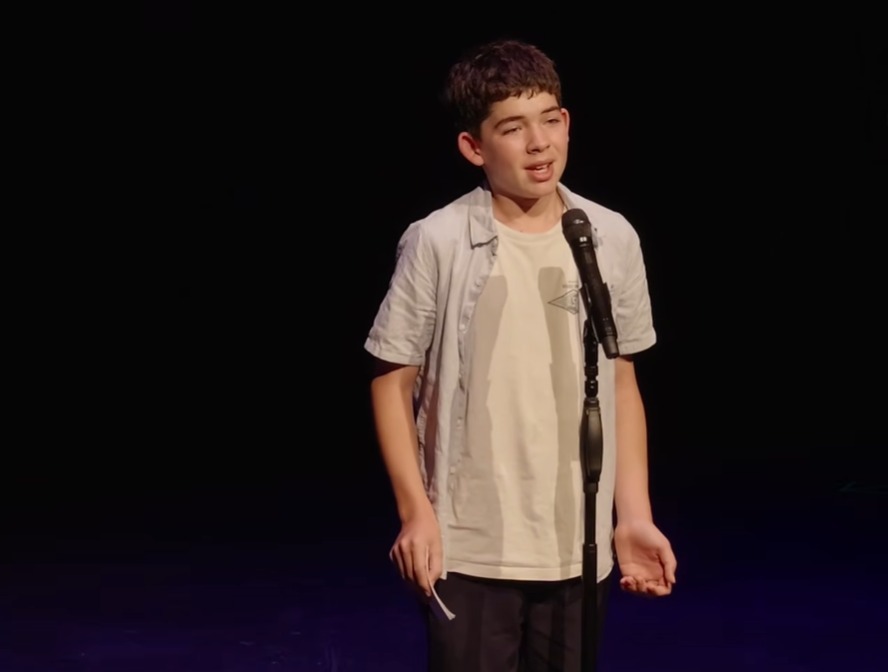
Twelve-year-old Blake Mackenzie from Newcastle, Australia, emerged victorious in the youth category at the 2026 Australian Poetry Slam, held on October 25. His winning poem, 'Dear ChatGPT,' addresses the implications of artificial intelligence, loneliness, and excessive screen time.
Read More
Performing at the Sydney Opera House, Blake delivered his 90-second poem, highlighting concerns over how AI chatbots may influence children's relationships. Reportedly, he composed the piece just a day before the competition, inspired by observing friends relying on chatbots for tasks such as summarizing books instead of reading them.
In an interview with Guardian Australia, Blake expressed worries about the environmental impact of AI, noting that its increased usage requires significant computing power and water resources. He cited a Sydney Water estimate indicating that data centers in Sydney might use up to 250 megaliters of water daily by 2035, which exceeds Canberra's total drinking water supply.
Blake clarified that he did not use AI to craft his poem and typically steers clear of chatbots. He believes spoken-word poetry is a valuable medium for discussing the challenges faced by children today, despite not knowing many peers interested in the art form.
His participation in the competition was supported by his teacher, Mrs. Welsh, who attended the initial heats and state final. Blake credited her encouragement as a pivotal factor in his journey to the national level.
The 2026 Australian Poetry Slam, its 22nd iteration, featured 65 heats across 60 locations, culminating in 16 finalists. Blake shares a prize package valued at AUD 20,000 with the adult category winner, Bivor, who won with his poem 'Politics is Doing You.' Bivor, originally from Bangladesh, now resides in Alice Springs.
As part of their victory, both winners will participate in various writing and poetry festivals over the next year, with Blake attending events in Australia and Bivor traveling to Indonesia and Singapore. Blake also performed another poem titled 'I Love My Country,' which tackled themes of inequality, racism, and political divisions in Australia.