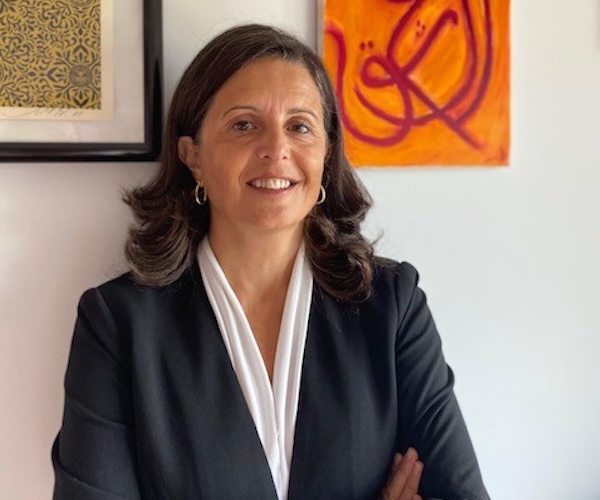
In an interview with author and scholar Lelia Farsakh, she discusses her life shaped by displacement and her upcoming memoir, which delves into the Israeli-Palestinian conflict and her personal narrative. Farsakh, a political economist and professor at the University of Massachusetts, Boston, has published excerpts of her memoir in the Arrowsmith Journal. She also holds several publications on the Middle East and the Arab-Palestinian conflict.
Read More
Farsakh's previous works include *Rethinking Statehood in Palestine: Self-Determination and Decolonization Beyond Partition* (2021), *Palestinian Labor Migration to Israel* (2005, rev. 2012), and *The Arab-Jewish Questions: Geographies of Engagement in Palestine and Beyond* (2020), co-edited with Bashir Bashir. In 2001, she received the Peace and Justice Award from the Cambridge Peace Commission.
In her memoir, Farsakh aims to recount the history of the Israeli-Palestinian conflict since 1967 and share her personal journey of identity as a Palestinian born in exile. She reflects on the early years of her life in Jordan, where she was born just after the Six-Day War, and her subsequent experiences growing up in places like Kuwait and Dubai, which she describes as lacking a sense of home. "I had very much an Arab diasporic experience of being Palestinian," she states.
Farsakh recalls her childhood memories of fleeing Jordan during Black September and moving through different cities, constantly in search of a place that felt like home. Although her life in Dubai provided stability, she felt it lacked depth and connection to her Palestinian identity. Despite the challenges of displacement, her family remained dedicated to the idea of returning to their homeland.
She shares that her first visit to Palestine in 1977 at the age of ten felt transformative and affirming, describing it as paradise compared to her life in Dubai. "This is what my father told me about," she reflects, emphasizing how that initial trip solidified her connection to her heritage.
Farsakh also discusses her father's aspirations for Palestine and how his dreams of returning influenced her own yearning for a homeland. "His dream was to build a home and die in Palestine," she explains, noting that he achieved this before his death.
Addressing the complex historical and contemporary dynamics of nationalism in the region, Farsakh critiques the impacts of Zionism on Palestinian lives. "Zionism is a project of power... but don’t forget that it was born out of trauma as well," she notes, emphasizing the need for understanding and reflective dialogue to break cycles of violence.
When asked about a potential equitable solution for both Israelis and Palestinians, she advocates for a single democratic federal state that allows equal rights for all citizens. Farsakh believes that understanding and embracing shared humanity is essential for coexistence and conflict resolution.
As she considers broader Arab and global implications, Farsakh acknowledges the struggles faced by Palestinians through regional politics and emphasizes the necessity of recognition and rights across cultural and national boundaries. Despite the challenges, she expresses optimism for improved awareness and multilateral relationships in the future.
This interview has been edited for length and clarity. Farsakh’s ongoing memoir and additional writings can be found in various publications.
Preston Gralla is a seasoned writer with numerous published works and accolades in both fiction and journalism, including contributions to prominent media outlets.