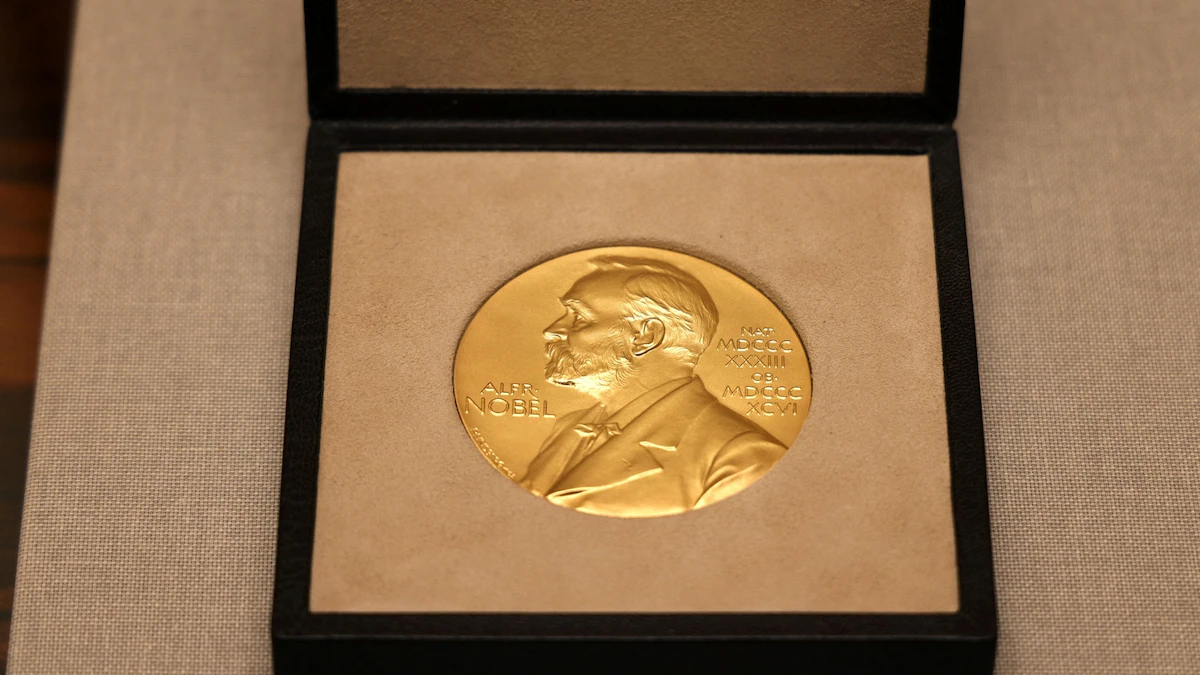
Since their inception in 1901, the Nobel Prizes have recognized individuals and organizations for significant contributions to humanity, in accordance with the vision of founder Alfred Nobel. The 2026 laureates will be announced between October 5 and 12, starting with the Nobel Prize in Medicine on Monday at 11:30 am (0930 GMT).
Read More
Over the years, five Nobel Peace Prize recipients have been unable to attend the ceremony in Oslo. In 1936, German journalist Carl von Ossietzky was detained in a Nazi concentration camp. Aung San Suu Kyi was under house arrest when she won in 1991; although granted permission to travel, she opted not to for fear of not being able to return to Myanmar. Chinese dissident Liu Xiaobo was imprisoned in 2010 when he received the prize, leaving his chair empty during the ceremony. In 2022, Belarusian human rights advocate Ales Bialiatski was jailed and represented by his wife. In 2023, Iranian activist Narges Mohammadi received the award while being held in Iran's Evin prison.
Malala Yousafzai, a Pakistani human rights activist, became the youngest Nobel Prize winner at age 17 in 2014. Other young laureates include Australian Lawrence Bragg, awarded the Nobel Prize in Physics at 25 in 1915, and Iraqi activist Nadia Murad, who won the Nobel Peace Prize at 25 in 2018. Conversely, John Goodenough, awarded the Nobel Prize in Chemistry in 2019 at 97, is the oldest laureate, while Arthur Ashkin won the Nobel Prize in Physics the previous year at 96.
Posthumous awards have been limited since 1974 when the Nobel Foundation changed its statutes to state that prizes cannot be awarded posthumously, although exceptions exist if a recipient dies after the announcement but before the ceremony. Before this change, only Dag Hammarskjöld, who died in a plane crash in 1961, and the poet Erik Axel Karlfeldt, who was awarded the Nobel Prize in Literature in 1931, were awarded posthumously. In 2011, Ralph Steinman was awarded the Nobel Prize in Medicine posthumously, as the committee was unaware he had passed just days prior.
Since 1901, only 68 of the 633 Nobel prizes have gone to women, accounting for roughly 10 percent of awards, with recent years showing an increasing trend. The fields of science see the least female representation, with only five women having won a Nobel Prize in Physics out of 230 laureates, three out of 99 in Economics, eight out of 200 in Chemistry, and 14 out of 232 in Medicine. Marie Curie remains the only woman to receive two Nobel Prizes, for Physics in 1903 and Chemistry in 1911.
Alfred Nobel, known largely as the inventor of dynamite, was also a passionate admirer of English poetry, influenced by writers like Percy Bysshe Shelley and Lord Byron. Throughout his life, he wrote poetry, mostly in English, to alleviate personal distress. He once noted in a letter that he did not consider his verses worthy of the title poetry, writing primarily for self-improvement. In 1896, the year of his death, he penned a dramatic work titled "Nemesis," inspired by Shelley’s "The Cenci."