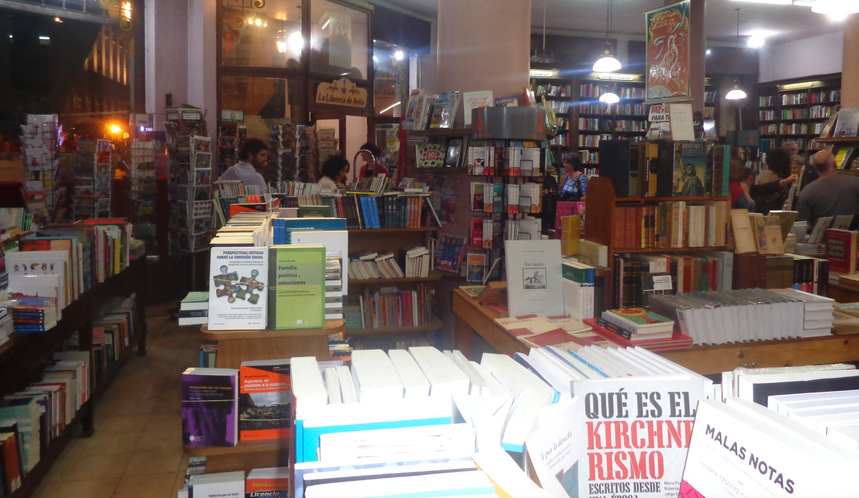
The Federación Argentina de Librerías, Papelerías y Afines (FALPA) has declared a state of emergency in Argentina’s bookselling sector as sales and revenue for independent bookstores have significantly declined. Reports indicate a 25% drop in unit sales and a 41.5% decrease in real revenue amid rising operational costs.
Read More
FALPA's announcement comes in light of financial challenges faced by approximately 1,200 independent bookstores. An analysis comparing the January-August periods of 2023 and 2026 revealed a steep decline in sales, with operating costs soaring by 31.1% after inflation adjustments. To offset revenue losses, bookstores would need to reduce real operating costs by 34% to 38%, a task deemed unrealistic by the federation.
This situation is described as a “scissor” effect, where bookstore revenues are decreasing while expenses for utilities, communications, freight, and logistics are on the rise.
Independent bookstores face heightened vulnerabilities compared to larger retail chains. They typically receive discounts of 35% to 42% off retail prices, which must cover rent, salaries, and logistics, leaving a narrow profit margin of just 2% to 5%. In contrast, large chains can obtain discounts ranging from 50% to 55%, allowing them better negotiating leverage.
FALPA is advocating for several measures, including enhanced enforcement of Law 25.542, which sets uniform retail prices for books, the establishment of emergency credit lines with favorable terms, reduced postal rates for books, prioritization of local bookstores in public procurement, and the formation of a National Book Roundtable to unite industry representatives.
On September 17, Fundación El Libro, which oversees the Buenos Aires International Book Fair, expressed serious concern regarding the economic situation and voiced full support for FALPA’s emergency declaration. The organization highlighted the essential role of independent bookstores in promoting bibliodiversity, showcasing small and medium-sized publishers, and facilitating reader connections through knowledgeable booksellers.
Fundación El Libro cautioned that if these bookstores close, the literary landscape would suffer, leading to greater inequalities in book access and jeopardizing the development of reading culture in Argentina. They reiterated the urgency of steps such as enforcing the country’s uniform book pricing law, providing VAT exemptions, and encouraging federal postal distribution of books.