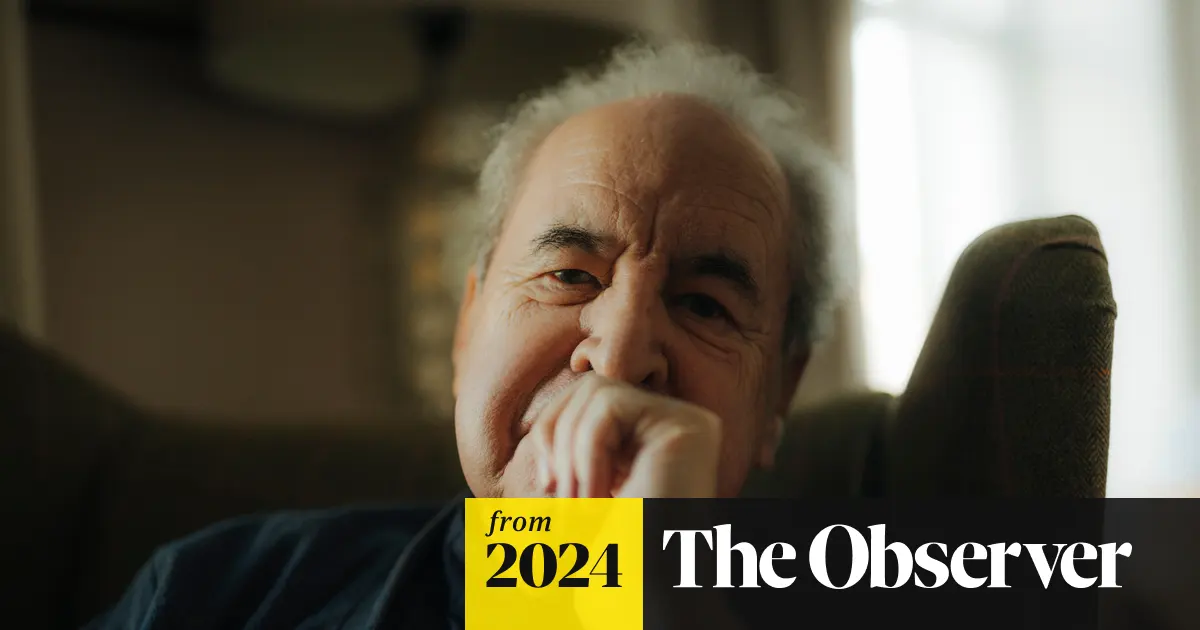
John Banville, sitting in his home in Howth, just outside Dublin, offered his perspective on life, loss, and literature during an interview. He joked about sharing a glass of wine as he noted that he wasn’t a fan of solitude, despite spending many hours writing daily since he began his career in the early 1980s. Banville has lived in this house, where he wrote many of his novels, including the Booker Prize-winning The Sea in 2005.
Read More
Banville's life took a painful turn three years ago with the death of his estranged wife, textile artist Janet Dunham, due to advanced liver cancer and COVID-19. He described being in a “fugue state” of grief, stating, “There are only two kinds of people in the world: those who are bereaved and those who are yet to be bereaved.” He shared that he undertook a ritual of discarding something each day for nearly a year after her passing and now often finds himself searching for lost items around the house, reflecting deep feelings of absence.
At 78, Banville is currently a writer in residence at the Prado Museum in Madrid, where he found the experience both rewarding and daunting. He mentioned his surprise at how eerie it felt to view masterpieces like Velázquez's Las Meninas alone in the gallery, pondering the interaction between art and the writer's mind while faced with the gazes of the paintings. During this residency, he is writing a piece of fiction inspired by his surroundings, focused on a troubled character in the museum who feels haunted by the paintings.
Born in Wexford, Ireland, Banville attributes his literary inclinations to a family history filled with storytellers. He described his father’s side as ‘slightly mad,’ filled with fantastical tales. His journey as a writer commenced in childhood, influenced by reading James Joyce’s Dubliners, which sparked his desire to express the nuances of life differently than conventional storytelling.
Banville holds a critical view of Irish history, identifying a disconnect with nationalism and expressing concerns that detrimental societal norms arose post-independence. He recounted moments from his childhood that shaped his understanding of power dynamics in society, particularly regarding the influence of the Catholic Church.
While reflecting on his career, he expressed ambivalence about public acclaim, noting that he has received more recognition in Spain than in Ireland. He humorously recalled a mix-up where he was mistakenly informed he had won a Nobel Prize, prompting him to call friends to celebrate, only to retract the news later.
As for his writing, Banville is currently working on a memoir titled Out of True, which he claims is a “pack of lies.” The storyline reflects personal experiences, intricately woven with fictional elements about a last surviving man amidst a catastrophe. He admitted that the writing process has become more complicated with age, as he finds the time to write increasingly elusive due to life's demands.
Banville's reflections include humorous anecdotes about his relationships, emphasizing his appreciation for women and the complexity of love throughout his life. He expressed pride in his body of work, recognizing a gradual shift from embarrassment over past failures to a newfound appreciation for some of his sentences. The conversation highlighted Banville's continued passion for literature as he navigates his grief and creative endeavors.