"The Universe Is an Animal" by Jessica Mookherjee (Nine Arches, £11.99) explores the intersections of scientific language with personal histories of displacement and conflict. Many poems reflect on the echoes of violence stemming from the partition of East Pakistan and India, now modern-day Bangladesh, and the poet's arrival in Wales. For instance, in the poem "Waterlily," Mookherjee reinterprets Monet’s famed image into a haunting scene where an aunt hides underwater to escape communal riots. The poem employs repetition to create a layered sound and meaning: "the dress she sews me is washed / with river mud from Bangladesh. / And I become Welsh. Uncle becomes ash." Another significant work, "The Reproductions," arises from the poet's study of evolutionary biology, examining the effects of famine and war on mothers and children. Mookherjee contemplates how conditions of love and safety may be beyond our control, remarking, "I learned / a foetus can be reabsorbed / by the womb in sub-optimal / environments. When is it a good time?"
Read More
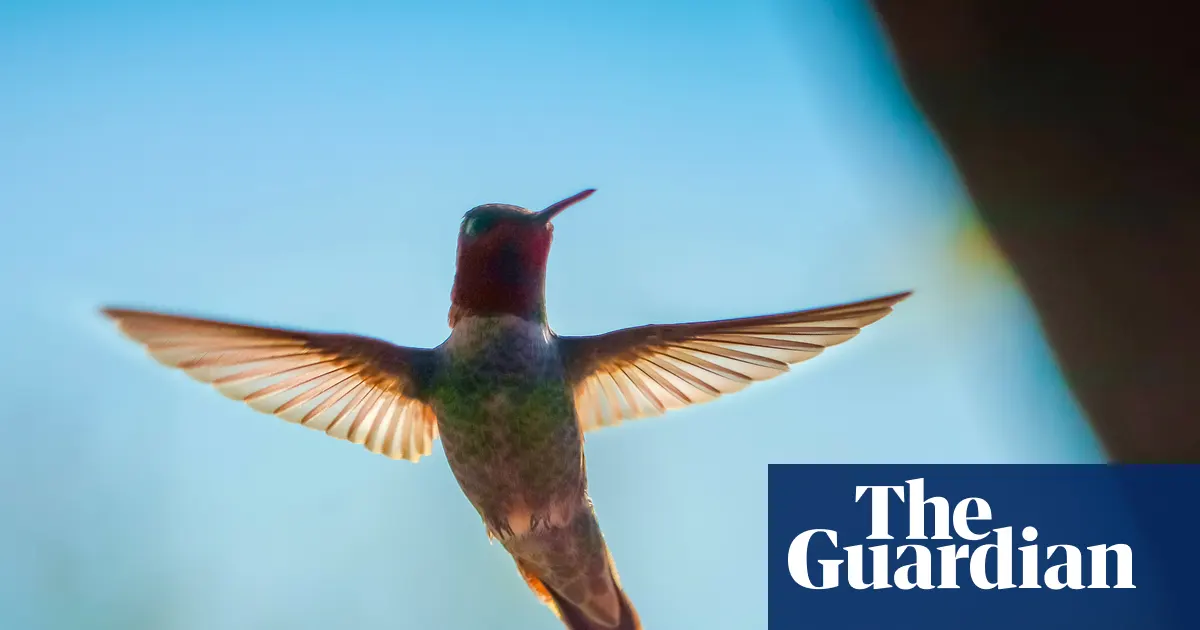
"Sleep Gate" by Sylvia Legris (Fitzcarraldo, £12.99) presents a detailed exploration of both human and nonhuman consciousness through a richly imaginative lens. Legris catalogues the dream lives of earthworms, honeybees, and hummingbirds with scientific precision, blurring the lines between the living and inanimate. She examines how sleep ties all things together, suggesting that "Sleep descends / as blood displaces air in the chest. // Sleep is a cooling off. / A rehearsal for death." Avoiding traditional anthropomorphism, Legris largely omits the personal "I," responding to the dire realities of mass extinction. Her work raises poignant questions about what will endure beyond human presence: "Who or what will measure time after the great extinction?"
"The Other Love" by Henri Cole (Penguin, £12.99) opens with the line, "It doesn’t smell here. / I can be whoever I want to be," and features a series of reflective and incisive lyrics that address themes of solitude and identity. Cole’s poetry is noted for its sharp tension, encapsulated in musings on American life, political themes, and moments of isolation, particularly during the Covid pandemic. In "No One Over Fifty, Please," he proposes that love serves as a remedy for mortality: "Another year passes, never to be lived again. / I remember being touched, but I cannot be and have been." Cole’s humor and tenderness shine through, as seen in his tribute to James Merrill in "Autumn Fern," where he stands at Merrill's grave, reflecting on generative connections with the deceased: "let this hole be a point of light." The collection expresses a passionate desire for an uncertain future, concluding with, "For all I know, the rest of my life is taking flight."
"Stay Winter" by Nidhi Zak/Aria Eipe (Faber, £12.99) continues the poet's exploration of folklore and mythology, blending varied cultural narratives. The collection incorporates classical Greek myths, Hindu traditions, and modern literature. In "Our Eyes Are on Europe," language from James Joyce’s "Ulysses" is woven into a dialogue about love and identity, beginning with references to historical navigation errors. Zak/Eipe’s work highlights the transformative nature of love, showcased in "Eros the Blacksmith," where the poet asserts, "this world / is held together by something / that you made." Through her innovative use of found text, Zak/Eipe reimagines the complexities of love and connection.