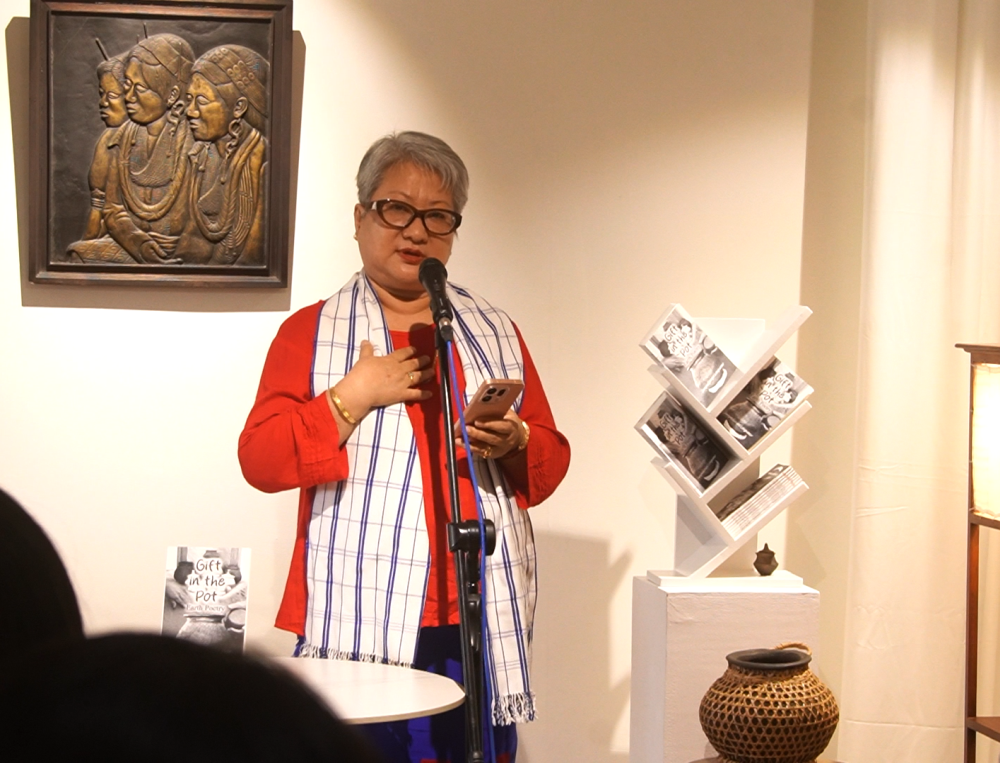
Esther Syiem, a retired professor from the Department of English at NEHU, Shillong, reviews Gift in The Pot: Earth Poetry, a collection by Jungmayangla Longkumer published in 2014. The poems feature stark imagery and are paired with photographic illustrations, resulting in a compelling narrative about the women potters of Changki, Longjemdang, and Japu villages in Nagaland.
Read More
Longkumer, also known as Ayang, is a trained sociologist and serves as a professor in Agricultural Extension Education at Nagaland University, Medziphema Campus. Her previous work, Pottery: Earth Stories (2010), highlights the lives of women potters in another set of villages. To appreciate her latest poems, it's essential to recognize her deep connection with these women, which transcends academic perspectives. This bond allows her to explore their lives through poetry, captured in the essence of her work.
The first poem, "Inspiration," is dedicated to her grandmother, "Azao," and illustrates the strength of women portrayed as competent potters. Images show a woman fetching clay; the poet reflects on their shared experience, emphasizing the roles of motherhood and community inherent in their craft. Longkumer’s verses evoke warmth and a sense of belonging as she describes the nurturing and collaborative nature of these women's lives.
The collection reveals the practical wisdom of these artisans, who express their craft through a relationship with the earth. Lines such as, "I am the master. I am the servant," showcase the commitment and passion these women have for their art. They serve as a historical testament to unfaltering dedication, as their daily struggles and triumphs speak to a legacy passed through generations.
Through her poetry, Longkumer offers a window into the extraordinary dedication of these ordinary women, highlighting moments of pot-making that connect with the past. She explores themes of identity and the cyclical nature of creation, emphasizing their resilience amidst societal challenges. The poems combine public and personal experiences, melding the physical with the metaphysical to reflect the women's holistic identities.
Photographs by the poet’s husband, Temjenmenba, enhance the collection, presenting striking depictions of women engaged in their craft. These black-and-white images contribute to the sense of living history, portraying unselfconscious femininity in its purest form.
Gift in The Pot: Earth Poetry stands as a significant contribution to the literary landscape of Nagaland, addressing themes often overshadowed by political strife. Longkumer's background as a sociologist informs her clarity in crafting these poems, which resonate with the simplicity and depth of her subjects' experiences. The pots, filled with the essence of these women, symbolize a connection to their roots and heritage.