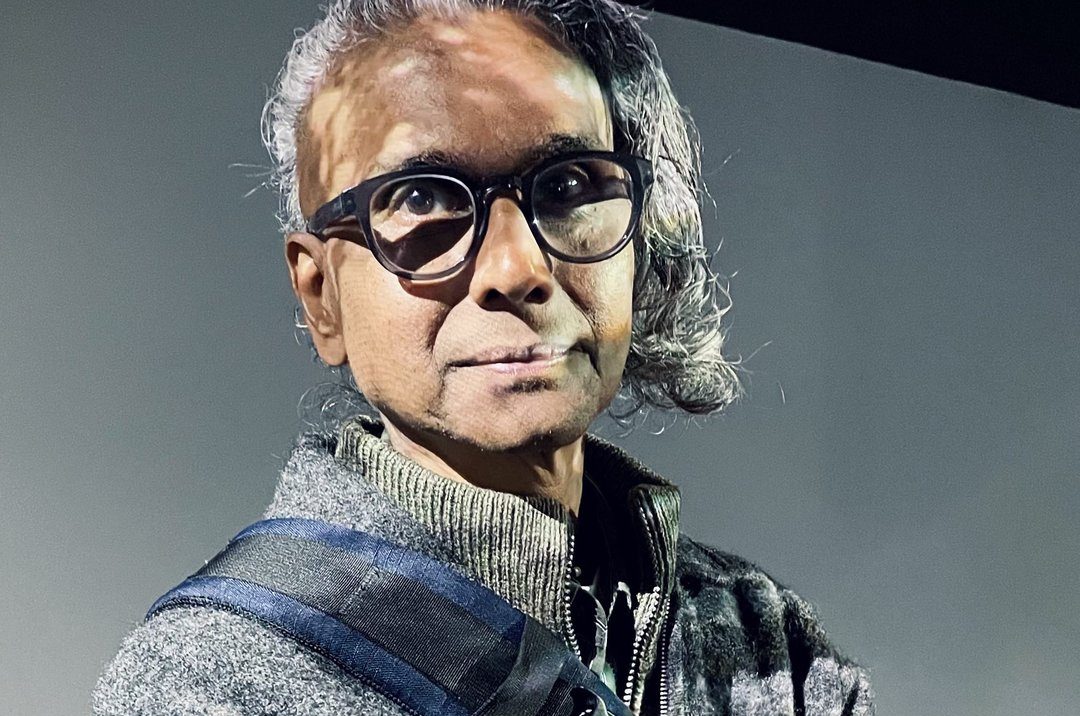
Ignatius Aloysius' new poetry collection, “Bone Dust Mother,” reflects on grief, family, and identity, emerging from the deep personal context of his mother’s death. His work traverses significant years and distances, capturing the nuances of his experiences in India and the United States, while addressing the intricate histories surrounding immigration and assimilation. Aloysius articulates his early experiences in the U.S. with both frankness and insight, recognizing how the personal and political are deeply intertwined.
Read More
In addition to discussing “Bone Dust Mother,” Aloysius reflects on the challenges of writing autobiographical content following his debut novel, “Fishhead: Republic of Want.” He reveals that poetry has been instrumental in coping with his grief, allowing him to confront his mother's illness and passing. He notes that language serves as a crucial medium for translating cultural, familial, and temporal identities.
As the co-creator and curator of the inaugural South Asian American Literary Festival, scheduled for August 22 at Chicago’s South Asia Institute, Aloysius aims to foster a vibrant literary community. He emphasizes that family dynamics often prompt explorations of broader historical contexts, stating that his poetry has increasingly engaged with themes of separation and opportunity in the immigrant experience.
Aloysius acknowledges that grief evolves, shaping his understanding of his mother as he wrote the collection. He expresses that grief is neither static nor simple; it is multifaceted and continuously informs his world view. Through the process of writing, he has integrated his sense of loss into a broader narrative about life’s fragility and the enduring importance of familial connections.
The poet also addresses the theme of translation—between languages and generations—within “Bone Dust Mother.” These translations occur organically within the text, captured through memories and cultural references, despite the often challenging reality of assimilation that has affected his connection with his native language.
Discussing the interconnectedness of his various works, Aloysius describes “Bone Dust Mother” as an epistolary collection where he converses with his mother’s spirit. This collection contrasts with the metafictional elements found in his novel, as he navigates his personal history and memories of leaving India for the U.S. These past experiences have shaped his poetic voice, which aims to be both lyrical and truthful.
Aloysius believes that identity is frequently shaped by external perceptions, a situation he grapples with in his poetry. He explains that the immigrant experience often involves negotiating one’s sense of self in unfamiliar contexts, a dynamic that enriches his creative expression.
The genesis of the South Asian American Literary Festival is rooted in a growing support for Asian American writers in the Chicago area. Aloysius highlights that collaborating with local organizations, including the South Asia Institute, helped pave the way for the festival, which aims to include diverse voices from the community.
As the festival's keynote speaker, Fatimah Asghar will discuss her new poetry collection, “Daughter of the Mountains,” focusing on themes of identity, exile, and belonging. Aloysius hopes the festival will spark meaningful conversations surrounding topics such as diaspora, trauma, and the rich variety of forms within South Asian American writing.
Aloysius expresses excitement about creating a space for community connection and artistic celebration, emphasizing that the festival will feature diverse panels, readings, and local food vendors, all culminating in a joyful cultural celebration.