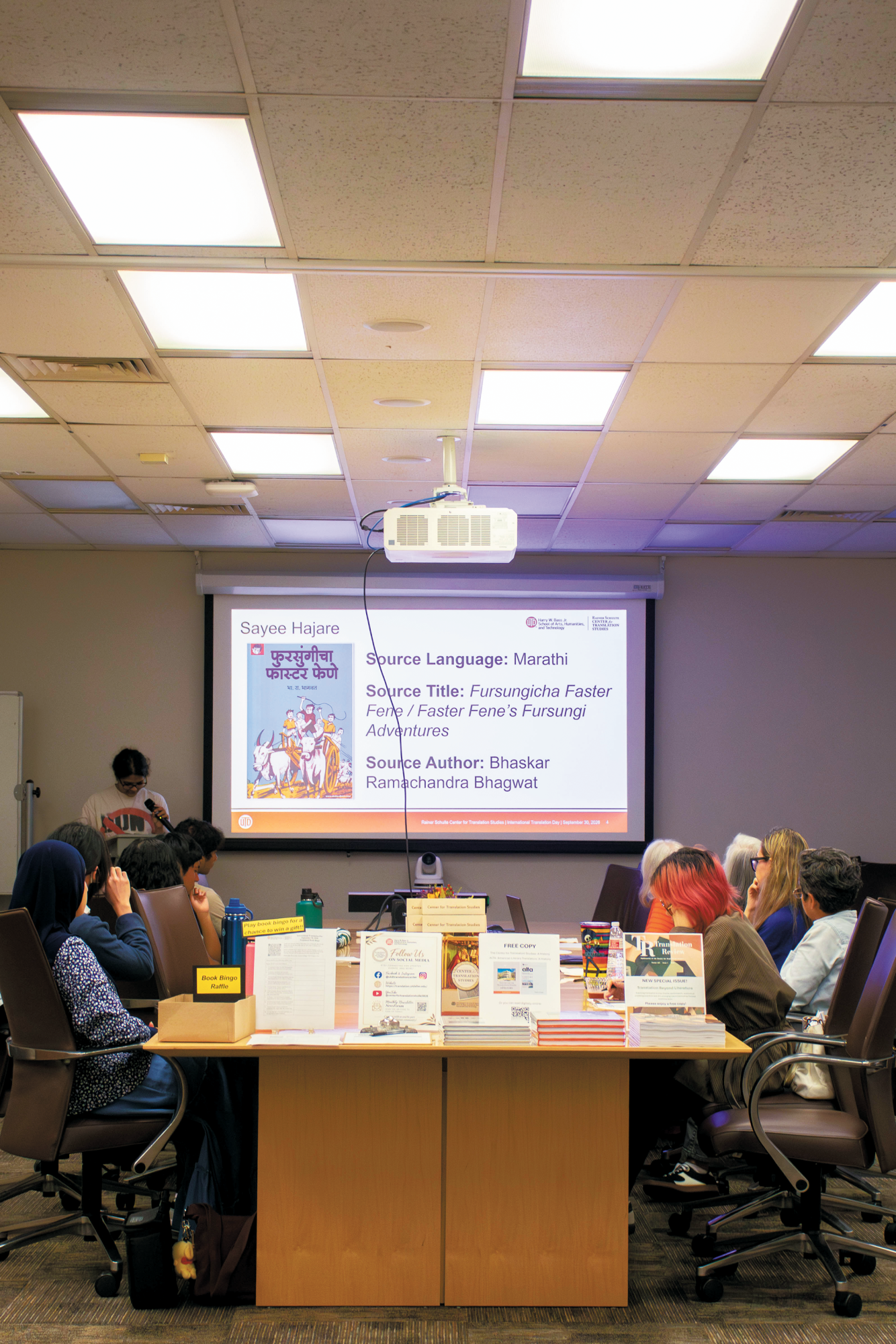
Sayee Hajare showcased her translation work from Marathi during the recognition of International Translation Day, held annually on September 30. This event was established following a UN resolution in May 2017, aimed at honoring the vital role translation plays in bridging different cultures and nations.
Read More
Jenny Bhatt, associate director of the Rainer Schulte Center for Translation Studies, noted that many readers often overlook the fact that they are engaging with translated works. Historically, publishers omitted translator names from book covers, believing that such information would deter readers. This misconception contributed to the invisibility of translators and the notion that translated texts were cumbersome to read.
Bhatt emphasized the creativity involved in translation, explaining that it entails capturing nuances and literary elements rather than merely converting words. Louise Alonge, a graduate literature student, reflected on the complexities of balancing historical context with contemporary relevance in her translation efforts.
Bhatt mentioned that complete fidelity to the original text is unattainable, as each translator's personal experiences and biases shape the outcome. She described her own path to translation as instinctive, rooted in her multilingual upbringing and a desire to connect with her late mother's Gujarati literature.
Alonge found her translation course under Bhatt enlightening, transitioning her perception from a mere language exercise to a rich, creative endeavor. Despite advancements in artificial intelligence, Bhatt asserted that human translators remain essential for infusing depth and cultural subtleties into translated works.
Through workshops and classes, Bhatt aims to foster a greater appreciation for translation as an art form, encouraging others to recognize its significance in everyday life. Alonge succinctly summarized the essence of International Translation Day with three words: "That translators matter."