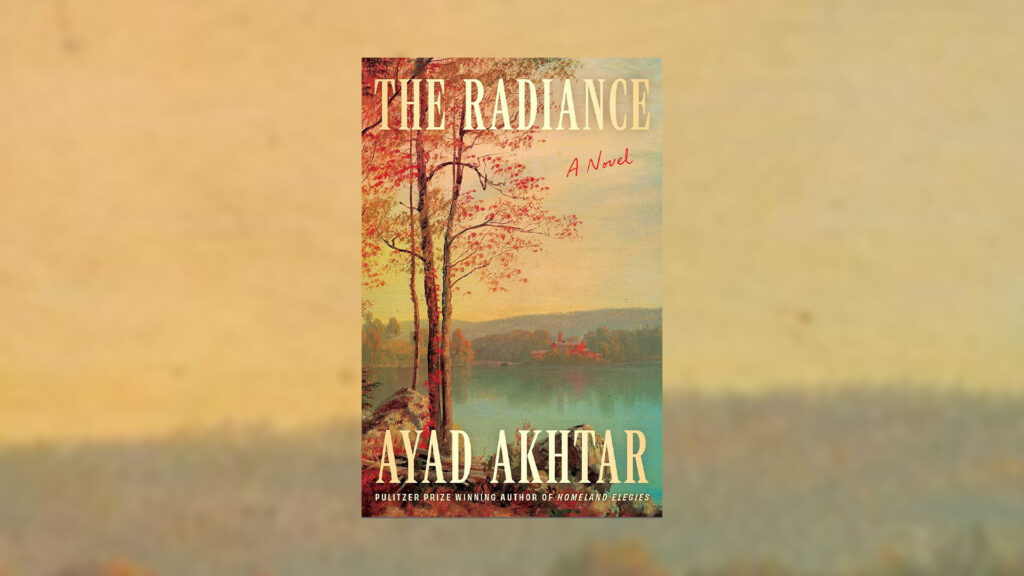
Ayad Akhtar, a Pulitzer Prize-winning playwright and author, has released a new novel titled "The Radiance," which delves into significant existential questions and the current state of America. In a discussion with senior arts correspondent Jeffrey Brown, Akhtar introduced his narrative, featuring a protagonist named Ayad Akhtar who, while riding his bike in rural Upstate New York, becomes a victim of a hit-and-run accident. This blurred line between fiction and reality serves as a central theme of the story.
Read More
The book follows an eight-month period in which the imagined writer experiences a shift in perception after the incident. According to Akhtar, the protagonist undergoes an altered state, viewing everything with heightened clarity and intensity, a transformation he describes as both an awakening and potential madness. He aims to probe into the essence of what we term the "soul," exploring how personal experiences shape storytelling.
Akhtar, who has tackled weighty subjects in past works, such as Muslim identity in his play "Disgraced," reflects on how contemporary America influences narratives. In "The Radiance," the character Ayad Akhtar teaches an investigative course in autofiction, integrating elements of Akhtar's own life as a Pakistani American. This duality invites readers to question which parts of the narrative are influenced by his reality.
As the character navigates a rural landscape marked by political divisions, the novel captures the societal rifts evident today. Akhtar describes a community split between differing ideologies, exemplified by Trump-supporting anti-vaxxers on one side of the road and urban migrants on the other, representing a real reflection of societal conflicts.
The setting within a college campus allows Akhtar to engage with larger philosophical inquiries about existence, a pursuit that he believes should be central to higher education. He notes that the current academic environment may be veering away from such discussions, mirroring a broader cultural trend against grappling with profound questions.
Akhtar's exploration of authenticity extends to modern challenges of truth in an age dominated by misinformation, AI, and diverse narratives. He posits that while objective truth is important, there exists a layer of metaphorical truth that artists strive to capture—an essential pursuit for any storyteller.
"The Radiance" serves as a timely reflection on identity, reality, and the stories we tell ourselves in contemporary society.