FRANKFURT, Germany — The Frankfurt Book Fair, a key cultural event in Germany, drew an estimated 235,000 attendees this year, opening for trade professionals on October 7 and welcoming the public from October 9. The Czech Republic served as the guest country, while representatives from 137 nations participated, showcasing their works at the extensive exhibition.
Read More
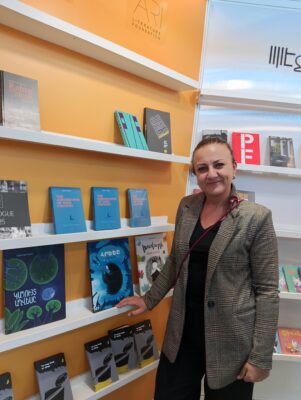
The Republic of Armenia had a notable presence within the international publishers’ halls. The Armenian stand exhibited a variety of new titles, both in Armenian and in translation, and was supported by the ARI Literature Foundation, which hosted events to foster discussions on critical issues.
Among these was an informal reception titled “Armenian Literature & Brandy,” held on the second day, which facilitated networking and conversations with authors Sargis Hovsepyan and Lusine Kharatyan, both recognized as nominees for the European Union Prize for Literature (EUPL). Both authors participated in panel discussions the following day, sharing insights on their literary perspectives and works.
Panel discussions at the fair addressed various themes including translation, political dynamics such as rising populism and the challenges posed by artificial intelligence (AI). American historian Jill Lepore highlighted how AI could jeopardize freedom of thought and expression, emphasizing the fundamental role of literature in sustaining democracy. The discussions often centered around the significance of literature and the act of reading.
Hovsepyan pointed out that Armenia uniquely commemorates translators with a religious holiday known as the Feast of Holy Translators, rooted in the legacy of Mesrob Mashtots. He further noted that while some translations fail, like the banned Farsi version of his novel, the importance of translation remains crucial to the survival of Armenian culture.
Anne Bergman remarked on the deep connection of Armenians to their heritage, observing that contemporary Armenian writers often struggle to gain popularity among the Diaspora, which tends to favor classical literature. Hovsepyan countered that the Diaspora represents significant potential due to its interest in global literature, affirming that translation has always been foundational to Armenian culture.
The fair also highlighted women in literature and publishing, with Arevik Ashkharoyan, director of ARI, leading a roundtable on “Women Leading Cultural Change: Stronger Literary Markets Through European Integration.” Publishers from five countries in the Caucasus and Eastern Europe participated, sharing their diverse backgrounds in the literary field.
Paola Erizanu from Moldova expressed her lifelong passion for literature, while Yulia Kozlovets from Ukraine recounted her family’s influence on her literary journey. Gvantsa Jobava from Georgia shared her experiences growing up in a politically conscious household, recognizing the power of books to instigate change.
Ashkharoyan emphasized that while few women occupy roles in publishing, they should focus on proving their capabilities through their work. She noted challenges faced by women, including censorship and state control over publishing, particularly in Georgia where external funding can lead to legal repercussions.
The fair's political context was noted, with Kozlovets mentioning that the Frankfurt Book Fair ended negotiations with Russia in 2022, reflecting broader shifts in international relations. Ashkharoyan remarked on the lessons learned from Ukraine’s situation, drawing parallels to Armenia’s own struggles and recent political developments.
The Armenian stand benefited significantly from support provided by NOAH, an association founded to enhance cultural exchange between Armenia and Germany. NOAH contributed both financial aid and volunteer personnel to help promote Armenia's cultural heritage at the fair.
Among the showcased works was the illustrated book, Twenty Years of NOAH, celebrating the association's efforts in fostering intercultural dialogue.