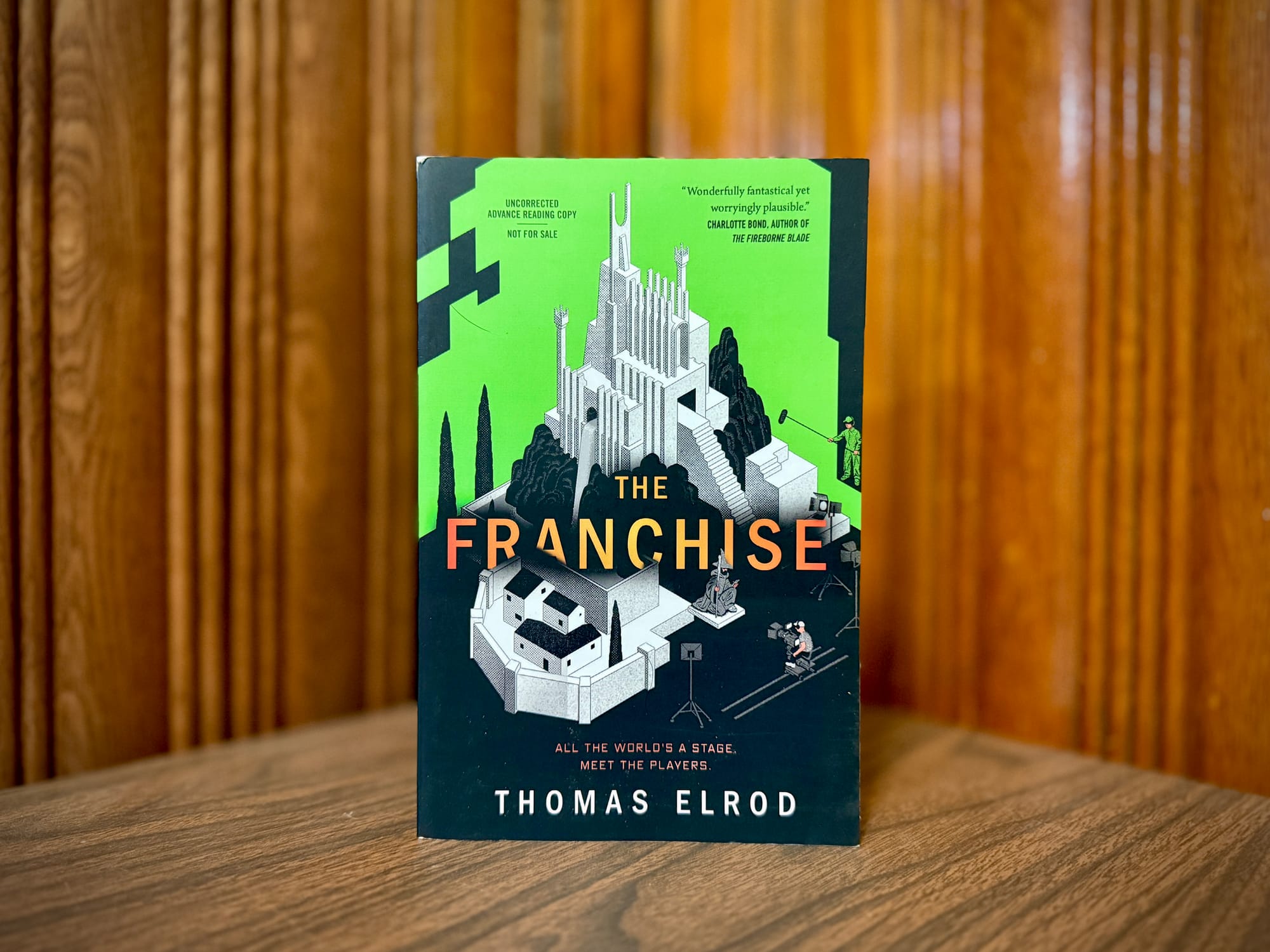
In a recent interview, author Thomas Elrod discussed his debut novel, The Franchise, exploring themes related to media franchises and storytelling. The novel centers on a fictional media franchise originating from an epic fantasy novel, The Malicarn, published in the 1960s. As the story unfolds, the franchise's corporate owners develop technology to manipulate the memories of the actors, making them believe they're living in a real fantasy world, which ultimately leads to chaos.
Read More
Elrod, who has worked in various roles within academic publishing, shared that this journey marks his transition into fiction after years of writing criticism. He currently specializes in acquiring math books for an academic publisher.
Shifting to the world of commercial fiction, Elrod noted significant differences between academic and commercial publishing, highlighting the broader appeal and longer timelines of the latter compared to the fast-paced nature of academic work.
His interest in science fiction and fantasy began in childhood, influenced by classics from authors like Isaac Asimov and J.R.R. Tolkien. Elrod appreciates these genres for their ability to explore expansive themes while also embracing the potential for literary depth.
The concept for The Franchise arose from Elrod's observations of the relentless cycle of content creation in popular culture, particularly within franchises like Marvel and Star Wars. He expressed concerns over the lack of organic endings to stories and pondered the implications of continuously extending narratives beyond their natural conclusions.
During the discussion, Elrod remarked on the historical tendency of audiences to gravitate toward familiar stories, comparing it to timeless narratives such as those of Shakespeare and Homer. However, he also highlighted the risk of fandoms becoming toxic and the commercialization of beloved stories detracting from their original intent.
Elrod's reflections on recent developments in nerd culture—marked by the ascent of franchises like Harry Potter and Game of Thrones—emphasized both the benefits and challenges of such mainstream acceptance. He noted the phenomenon of returning to old characters and stories but cautioned about the health dynamics in fan communities.
Regarding his book, Elrod mentioned it encourages readers to reflect on their experiences in a world dominated by unending narratives. He hopes to prompt discussions about societal stagnation and the potential for a healthier storytelling future. The Franchise is now available in bookstores.